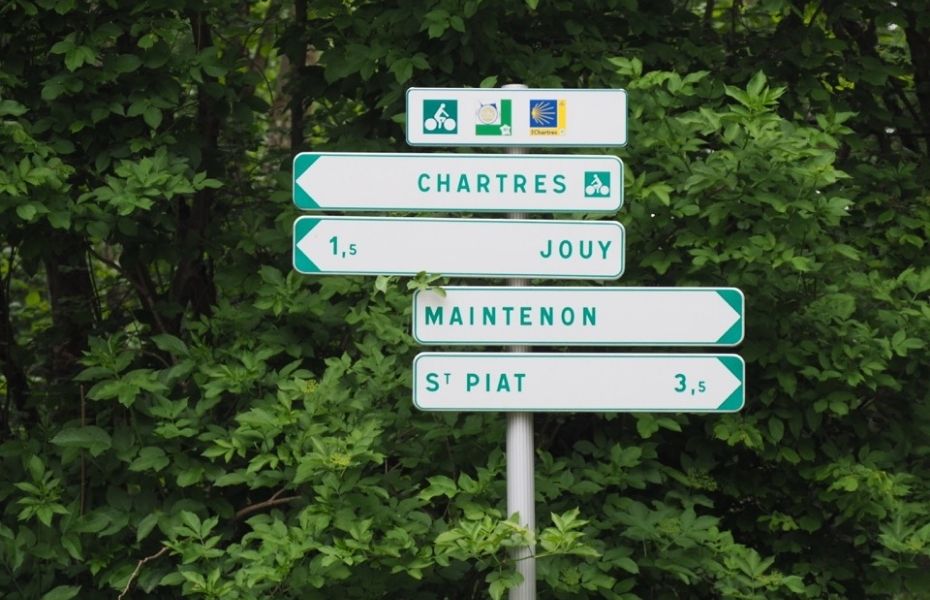
From Paris to Mont-Saint-Michel, the Véloscénie offers a cycling escape past landmark monuments and ever-changing landscapes.
What is the Véloscénie?
With its dedicated cycle paths, greenways, quiet shared lanes and forest tracks, the Véloscénie is cycle touring at its very best. It runs for 450 km, threading through the Chevreuse and Perche valleys and on into the Norman bocage.
The Véloscénie is recognised as a key route within France’s national network of cycle routes and greenways.
Since 2011, the partner local authorities have worked together to make cycling safe and enjoyable across the areas the Véloscénie passes through.

The stages of the Véloscénie
The Véloscénie is divided into 10 stages, but it also offers shorter rides thanks to 11 loops along the way that you can tackle over 2 or 3 days.
Stage 1: Paris to Versailles
Stage 2: Versailles to Rambouillet
Stage 2b: Massy to Rambouillet via Limours
Stage 3: Rambouillet to Chartres
Stage 4: Chartres to Illiers-Combray
Stage 5: Illiers-Combray to Nogent-le-Rotrou
Stage 6: Nogent-le-Rotrou to Mortagne-au-Perche
Stage 7: Mortagne-au-Perche to Alençon
Stage 8: Alençon to Bagnoles de l’Orne Normandie via Pré-en-Pail-Saint-Samson
Stage 8b: Alençon to Bagnoles de l’Orne Normandie via Carrouges
Stage 9: Bagnoles de l’Orne Normandie to Saint-Hilaire-du-Harcouët
Stage 10: Saint-Hilaire-du-Harcouët to Mont-Saint-Michel
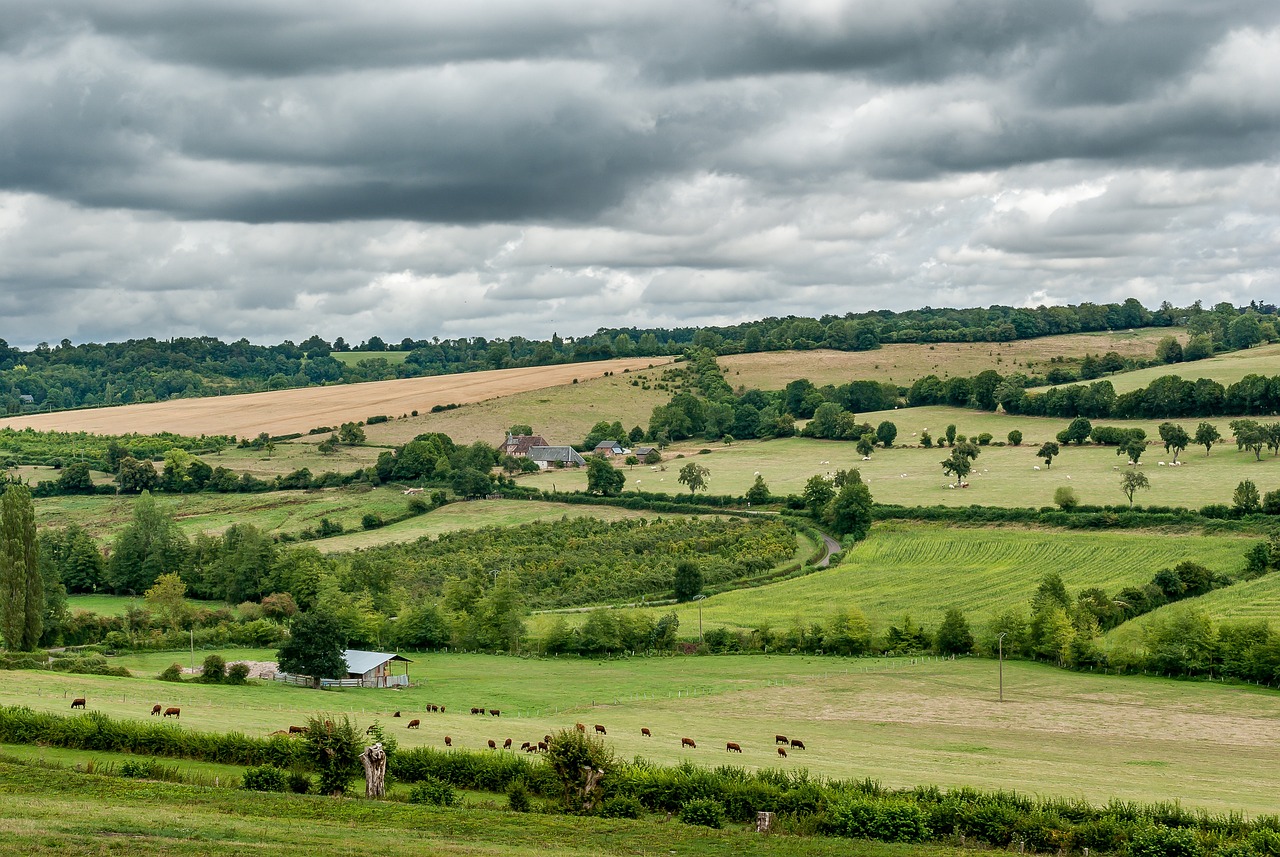
The Normandy cycle route
When should you cycle the Véloscénie?
The best time to go is between June and September, both for the milder temperatures and, above all, for what’s open along the route. Out of season, not all the services you’ll want are up and running.
Another thing to weigh up when picking your dates is how busy the main sights are. If you love a lively atmosphere you’ll choose different dates than if you’d rather have peace and quiet.
What kit do you need for the Véloscénie?
A bike, first of all. A hybrid, a mountain bike or a gravel bike works well, as they handle mixed terrain with ease. If you’re new to cycle touring, an electric bike is a great alternative and takes the strain out of the hillier sections for anyone who doesn’t ride much.
Consider hiring a bike so you also get the right gear, such as a front bag with a map holder, a bottle cage, a rear pannier, a repair kit, a pump, a helmet and a lock.
When it comes to your own kit, be ready for anything. In wet weather, pack a poncho or waterproof trousers, a waterproof jacket and dry bags to keep your luggage protected. Don’t forget visibility either, with reflective strips for example.
In hot weather, on the other hand, remember the sun cream, a water bottle and sunglasses.

How long does it take to ride the whole Véloscénie?
To cycle the Véloscénie from Notre-Dame in Paris all the way to Mont-Saint-Michel, allow at least 7 days. That gives you time to enjoy what makes each stage special.
That works out at an average of 65 km a day, which is perfectly manageable. Of course, you’re free to set your own pace, taking more days if you’d like a relaxed ride, or fewer if you want a faster, more sporty challenge.
The Véloscénie with the family
Thanks to the greenways that make up most of the Véloscénie, you can ride it safely as a family all the way to the bay of Mont-Saint-Michel. The sections that leave the greenways follow shared roads chosen for being quiet. If any part feels too much with young children, you can always link two chosen sections of the route by train.
Which stages of the Véloscénie should you choose?
There are several options on the Véloscénie depending on what you enjoy most.
Setting off from Paris, you reach Massy along the greenway through the Parc de Sceaux, then make for Versailles alongside the Bièvre, through the Chevreuse Valley and the Rambouillet forest. In such rural surroundings it’s hard to believe you’re still so close to Paris.
The Véloscénie then takes cyclists into the heart of the grounds of the Château de Rambouillet, an elegant residence shaped by the royal, imperial and presidential eras.
The Véloscénie in the Chevreuse Valley
You then leave the Île-de-France and head towards the Eure-et-Loir. With a few short detours, you can admire the Château de Maintenon and the magnificent Chartres cathedral perched high above the town.
After visiting Chartres, carry on exploring the Eure-et-Loir through fields of rapeseed until you reach Illiers-Combray and find yourself in the Perche Regional Nature Park. Its first stage brings you to the village of Frazé and the striking sight of a medieval defensive castle, complete with dry moats, machicolations, a drawbridge and imposing carved towers.
Next, pedal on towards the castle of the Counts of Perche at Nogent-le-Rotrou and take the time to walk around its moats, now turned into pastures.
The Véloscénie in the Perche valley
From Condé-sur-Huisne to the end of the stage, the greenway runs through the Perche to reach the shores of the lake at Le Mêle-sur-Sarthe.
More of a workout, the stretch between Alençon and Bagnoles-de-l’Orne takes you to the Château de Carrouges, the first example of Renaissance architecture in Normandy, which in its day welcomed Louis XI and Catherine de’ Medici.
To stay with the medieval theme, head next for Domfront, with its breathtaking panorama.

The Véloscénie in the Norman bocage
The following stage leads you to Mortain, where it’s well worth taking time for a short walk around the Grande and Petite Cascade waterfalls, where legend has it that goblins hide away to tell you their tales. After climbing the Côte 314, a panorama opens up before you and, on a clear day, Mont-Saint-Michel may appear in the distance.
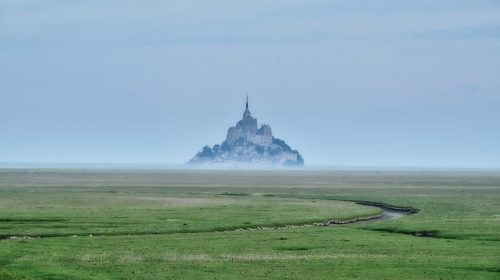
At this stage Mont-Saint-Michel draws closer, but first you can enjoy its bay at Pontaubault, with your first view of the Mont. Be sure to make your way to La Roche-Torin, home to the Vauban hut, a former customs guard post, and above all a chance to gaze once more at the Merveille from a different vantage point.
The finish of the Véloscénie
Here you are at the final stage of the Véloscénie.
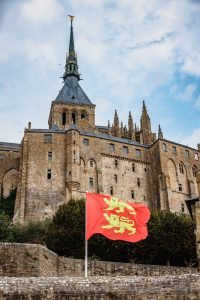
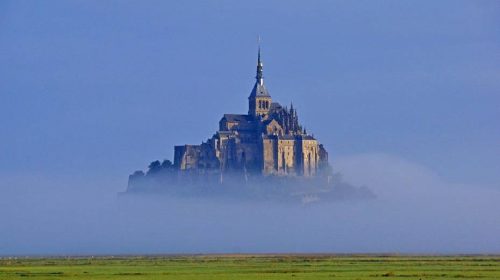
Mont-Saint-Michel, which you can now reach by bike thanks to the footbridge linking it to the mainland.
One crucial thing before you visit the Merveille, though: check the tidal coefficients, as the footbridge is sometimes underwater.
Then leave your bike in the Cour des Fanils, where a left-luggage service is on hand to look after your belongings.
All that’s left is to wander the Mont’s narrow streets and climb up to the abbey!
You now have everything you need to ride the Véloscénie.
And if the mood takes you, you can keep the adventure going towards Roscoff via the Vélomaritime.