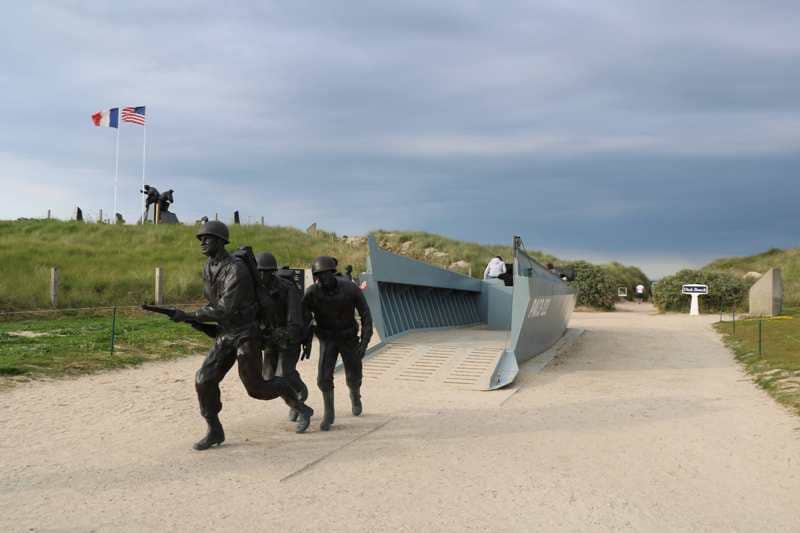
A D-Day self-guided tour is booked in one order and lived in another. You will experience it as mornings on the coast path, museum afternoons, a harbour dinner. You plan it backwards: dates first, route second, transport last. This guide sets out that order, with the numbers that matter — because 2027 departures around the June anniversary will be reserved before 2026 is over, and the best rooms on the landing coast go first.
We organise these trips year round from here in Normandy, so what follows is the advice we give our own clients on the phone. It fits walkers and cyclists equally.
Step 1 — Choose your season before anything else

The trips run from March or April to November. Within that window, the coast changes character month by month:
- April–May. Apple blossom in the lanes, museums without queues, sea light that photographers cross the world for. Cool mornings. Our favourite compromise.
- First half of June. The commemorations. Moving, crowded, and booked out furthest in advance — the 83rd anniversary falls on Sunday 6 June 2027, and that week is a world event.
- July–August. Full summer, family season, warm water. The memorial sites stay dignified; the seaside towns around them are lively.
- September–October. Our honest recommendation. The light softens, the coaches thin out, and you will stand at the Pointe du Hoc with the wind and not much else.
One rule holds for all of them: if your dates are fixed by school holidays or a family anniversary, book earlier than feels necessary. The hotels along this shore are small. That is their charm and their constraint.
Step 2 — Decide how you want to travel the coast
On foot, you take one sector deeply — the coast path, the lanes behind the dunes, the cemeteries reached in silence. By bike, you take the whole story, 30 to 45 unhurried kilometres a day on mostly level ground. There is no wrong answer; there is only the trip you want to come home having made.
If you are torn, start from the ground you most want under your feet. Readers whose one non-negotiable is Omaha and the American Cemetery walk. Readers who want Utah, Sainte-Mère-Église and Arromanches in the same week ride. Our D-Day tours hub compares every itinerary in both families on one page.
Step 3 — Match the route to the days you have
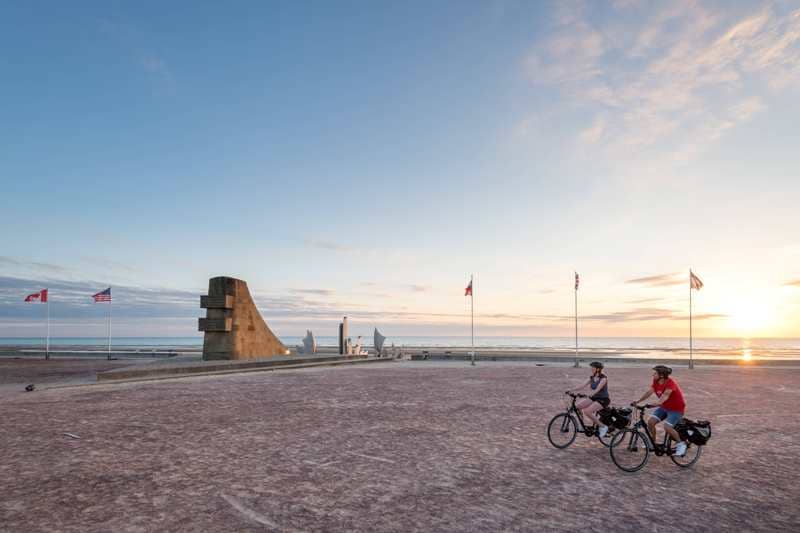
Three formats cover almost every case:
A long weekend (3 days). A three-day cycling break between Bayeux and Caen, from €260 per person, is the honest minimum: one sector, done properly, no pretending you saw it all.
The heart of the coast (5 days). The classic. Our five-day walking itinerary links Arromanches to Bayeux through Gold sector country from €505; its cycling cousins run Bayeux–Carentan and Caen–Bayeux at similar prices.
The full crossing (6–7 days). Six days from Bayeux to Sainte-Mère-Église from €600, or the seven-day road to Freedom from Caen to Cherbourg from €850 — the landing beaches first, then the Cotentin, ferry port to ferry port.
Before you fix the route, spend ten minutes with ten places worth building the trip around: knowing which three or four sites matter most to you personally is the fastest way to choose between itineraries. If Omaha anchors your trip, start with our guide to visiting Omaha Beach.
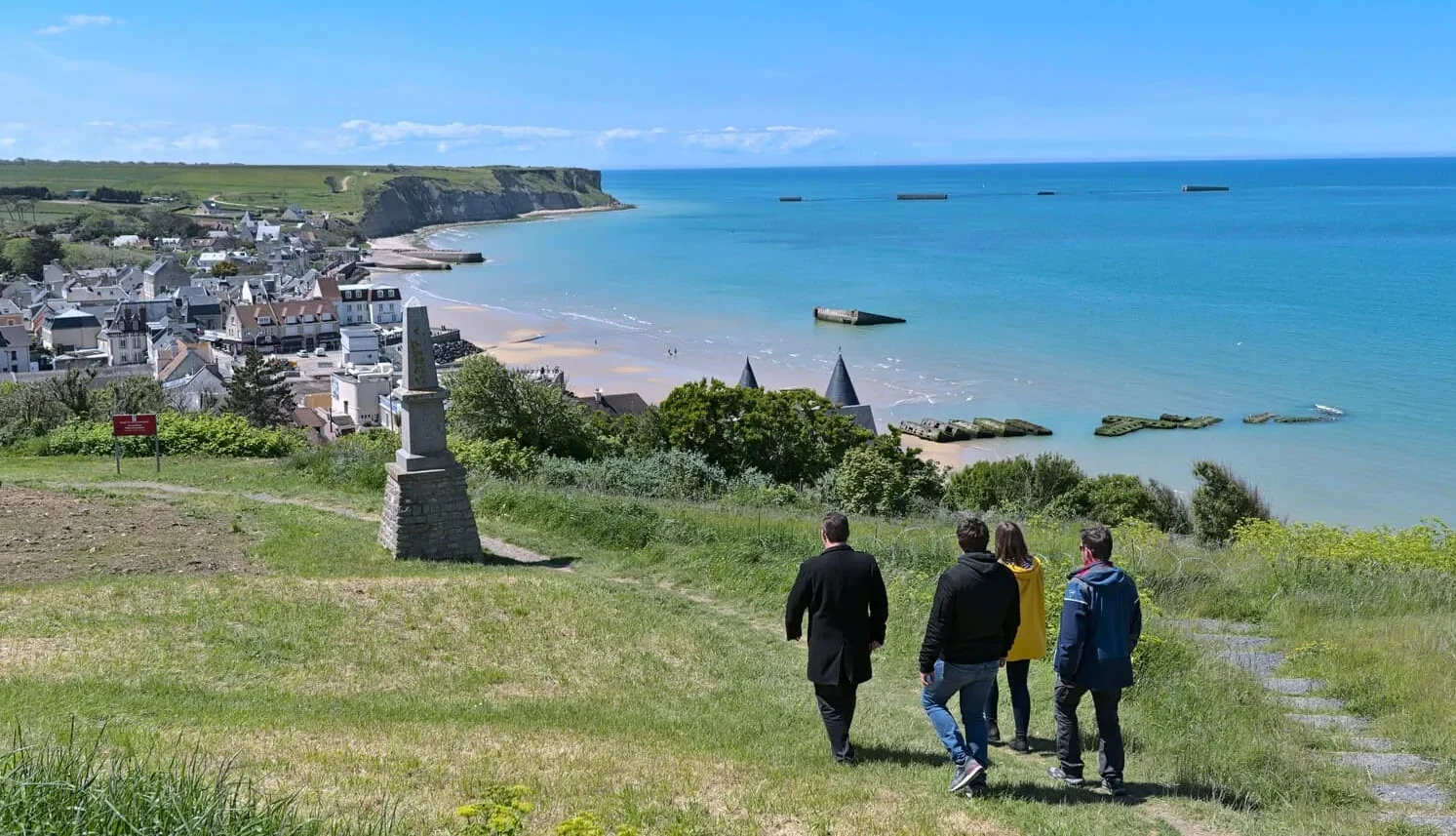
D-Day walk
Step 4 — Book in the right order
This is where trips are saved or lost. The sequence that works:
- Reserve the trip itself first. Accommodation on the landing coast is the scarce resource — a village like Arromanches has a fixed number of beds and no room to add more. For June 2027, enquire six to twelve months ahead; for September, three to six months is usually comfortable.
- Then fix your travel to France. Trains and ferries release seats later than you will want to book the trip, so lock the trip dates first and slot transport into them.
- Leave the details to the framework. On a self-guided tour the hotels, luggage transfers, route notes and GPS tracks are handled for you — the only bookings left on your side are getting to Normandy and home again.
Our clients who plan this way spend the winter looking forward to the trip. The ones who book flights first occasionally spend it renegotiating dates. Be the first kind.
Step 5 — Get to the coast without a car
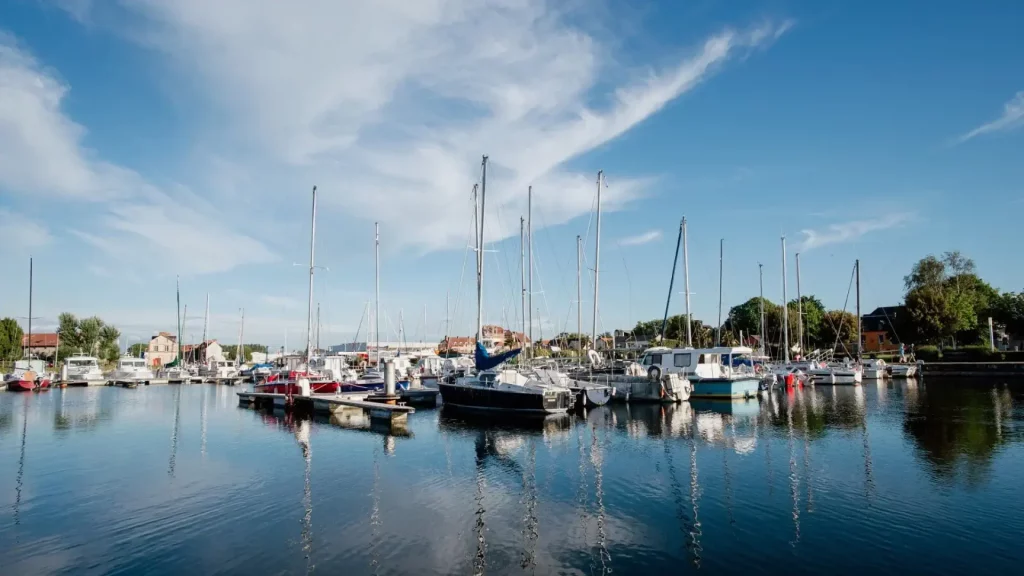
You do not need to drive any part of this.
- From Paris: direct trains run Paris Saint-Lazare to Bayeux in just over two hours, several times a day. Bayeux is the natural gateway — three of our D-Day itineraries start there.
- From the UK: Brittany Ferries crosses Portsmouth–Caen (Ouistreham) in about 5¾ hours, docking a few steps from Sword Beach, and Portsmouth–Cherbourg in about 3. The Caen–Cherbourg rides start at one port and end at the other, which makes a tidy boat-to-boat loop.
- On arrival: the trip absorbs you. Luggage goes ahead by van; you carry a day bag, a rain layer and the GPS route on your phone.
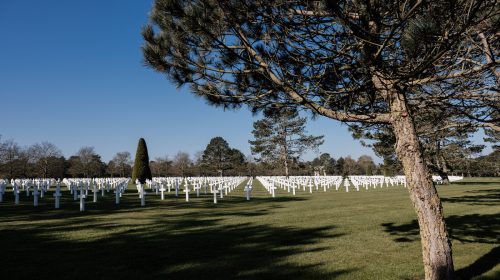
Pack light and check the tide times once a day — the great beach walks at Omaha and Arromanches are a different pleasure at low water.
The question underneath all the others
Should you wait for 2028 instead? If you can travel in 2027, no. The anniversary years concentrate attention, but this coast does its work in any year: the cemetery above Omaha is never crowded at nine in the morning, whatever the calendar says. The right year is the one your knees, your family and your diary agree on. The wrong plan is deciding in March for the June you wanted.
Frequently asked questions
How far in advance should you book a D-Day tour?
Six to twelve months for late May and June departures, which sell out first — anniversary week 2027 furthest of all. Three to six months is generally enough for April, September or October. Last-minute gaps do appear, but rarely in the villages where you most want to sleep.
Can you do a D-Day tour from Paris without a car?
Yes. Direct trains reach Bayeux from Paris Saint-Lazare in just over two hours, and Bayeux is the starting point of several itineraries. From there the tour runs on foot or by bike with luggage carried between hotels, so no vehicle is involved at any stage of the trip.
Do you need to be fit for a self-guided D-Day trip?
Moderately, not exceptionally. Cycling stages on the easier itineraries cover 30 to 45 level kilometres with all day to ride them; walking days move at sightseeing pace. Our trips are graded from relaxed to sporty, so choose honestly and the coast does the rest.
Is June 2027 already too late to book?
Not as of autumn 2026 — but the margin narrows monthly. Anniversary-week accommodation is the first thing on the coast to go. If 6 June matters to your plan, ask for a quote now; if you are flexible by even a week, your options roughly double.
Start the plan tonight
Here is the whole method in one line: pick the month, pick foot or wheels, pick the days you can give it — then request a free quote and let us hold the hotels while you settle the rest. Next June, somewhere between Arromanches and Bayeux, you will walk out of a hedgerow lane, see the sea open in front of you, and be very glad you did this part early.