The travel agency specialising in self guiding cycling and walking holidays!

The D-Day Beaches: 10 Must-See Places to Visit

Partager cet article :
Table des matières

The Allied landings of 6 June 1944 and the three months of fierce fighting that followed, known as the “Battle of Normandy”, marked a turning point in the history of the Second World War. These tragic events left a deep mark on the region and are now part of the heritage and identity of Normandy.

In this article, we take you through ten must-see sites linked to the Allied landings and the Battle of Normandy. From natural landscapes and museums to villages and military positions, each one helps you learn more about this chapter of our modern history.

1) The Caen Memorial

Just a stone’s throw from Caen city centre and only a few kilometres from the landing beaches, the Caen Memorial traces the history of the last world conflict, from its origins through to the Cold War. The story is brought to life through hundreds of photographs, objects and reconstructions, along with several films and temporary exhibitions. A priceless window onto our modern history.

2) The Omaha Beach Memorial Museum and the American Cemetery at Colleville-sur-Mer

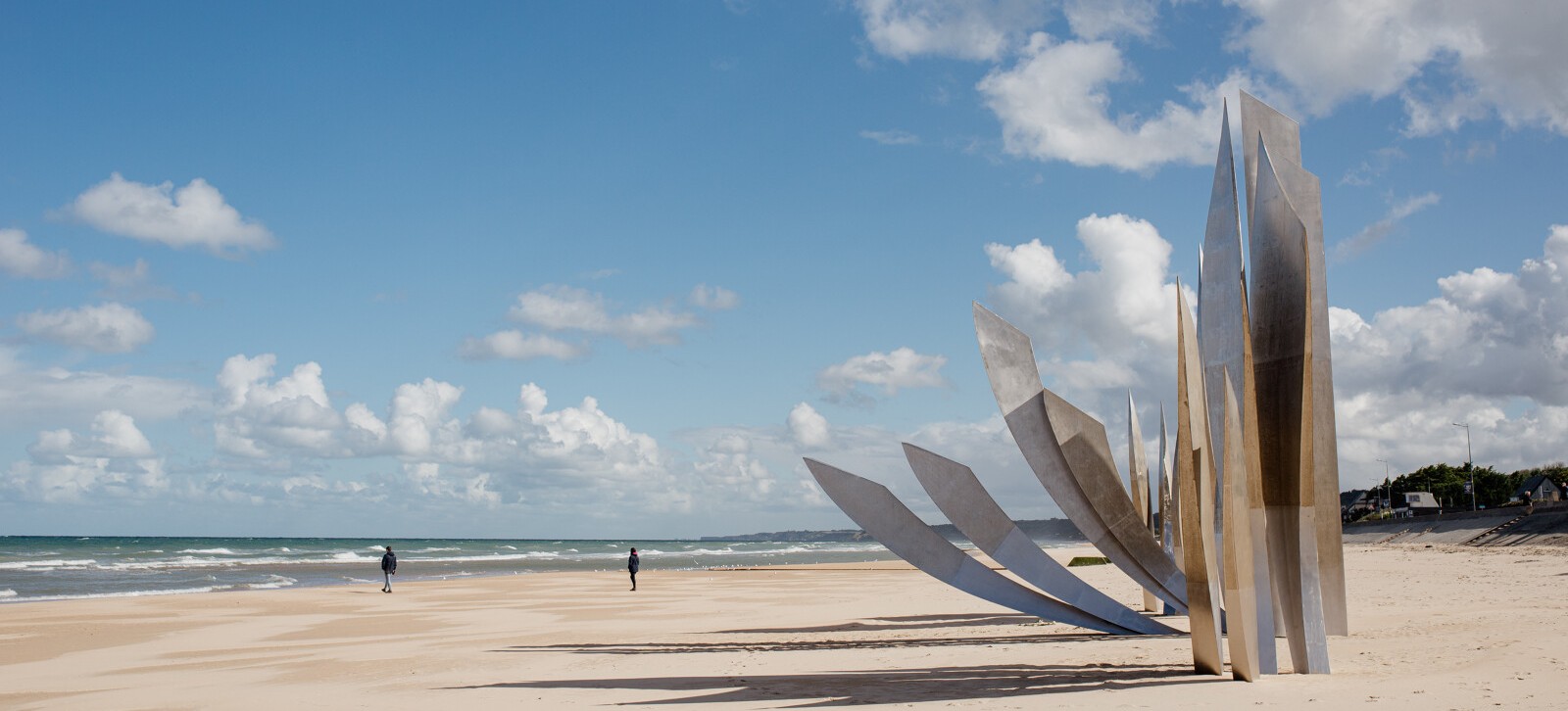
It was on Omaha Beach, nicknamed “Bloody Omaha”, that American troops met the fiercest resistance and suffered the heaviest losses of that tragic day. Landing at low tide at 6.30am, it was only by 10am that the GIs managed to reach the top of the cliff under fire from the German guns.

Through a substantial collection of objects, weapons, uniforms and photographs, the Omaha Beach Memorial Museum plunges you into the heart of the fighting and the daily life of the soldiers who landed on this beach on 6 June 1944.

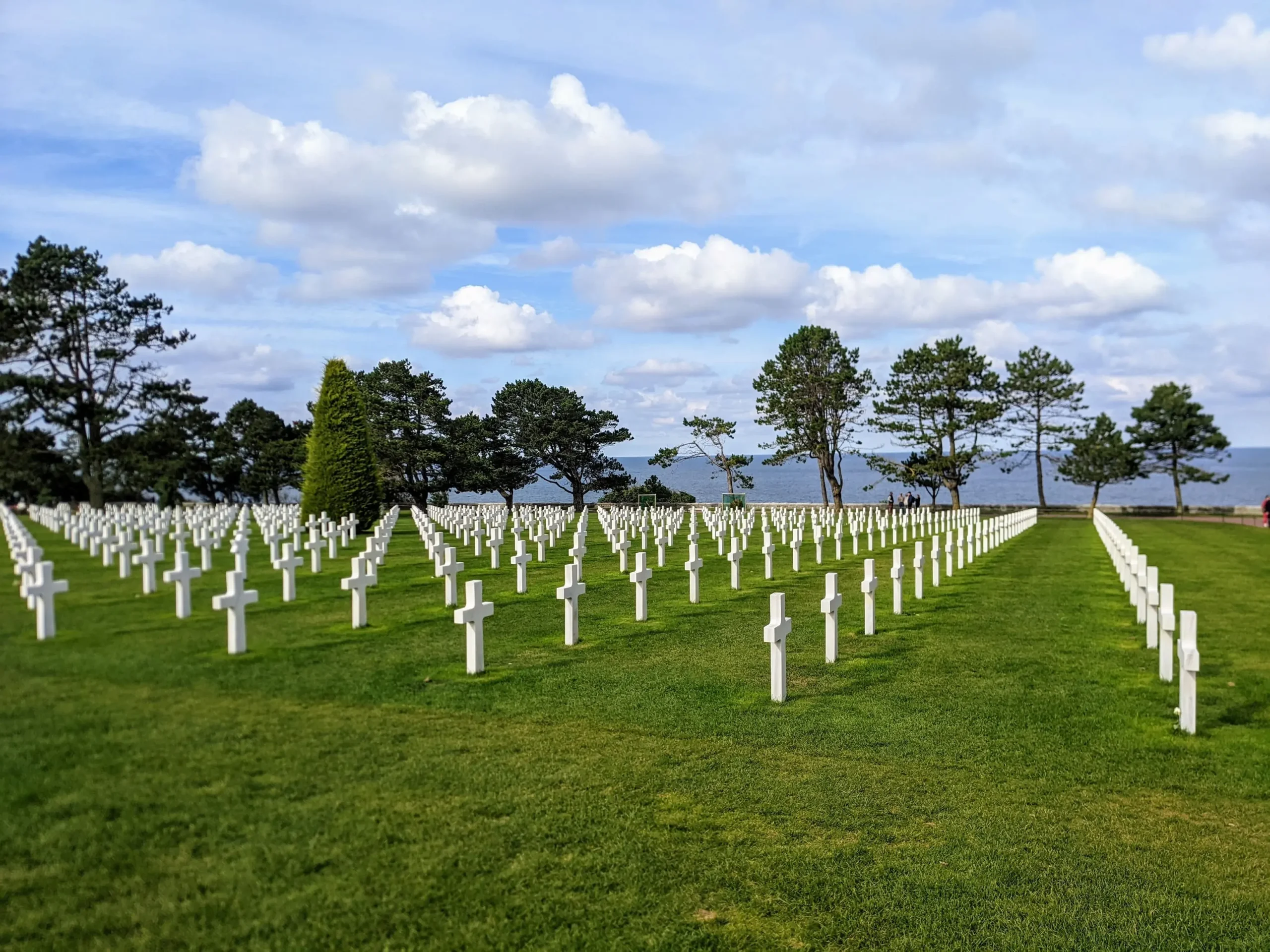
Three kilometres from the museum, at the top of that same Omaha cliff, lies the American Cemetery at Colleville-sur-Mer. This corner of the United States on French soil holds the graves of 9,387 soldiers and is now a place of pilgrimage for the families and descendants of the men and women who fell in battle.

The road to Freedom

The road to Freedom

From Caen to Cherbourg, this cycling holiday takes you to the heart of Normandy's coastline, history and local produce, following one of the most beautiful routes along the Manche coast. Over the course of several days, you will cycle between the great D-Day beaches, charming fishing ports, the Cotentin marshes, authentic villages and spectacular sea views!
Discover

3) La Pointe du Hoc

La Pointe du Hoc, a few kilometres from Colleville-sur-Mer, became famous for the assault led by the US Rangers on the German artillery position perched on top of the cliff. Because its guns could reach both Omaha Beach (to the east) and Utah Beach (to the west), the position was a vital strategic objective for the Allies in securing the troop landings. The fighting was brutal: with no other option, the Rangers scaled the cliff using ladders and eventually put the battery out of action, at the cost of heavy losses.

The site is now open to the public free of charge, and a visit lets you explore the remains of the artillery position.

4) Arromanches

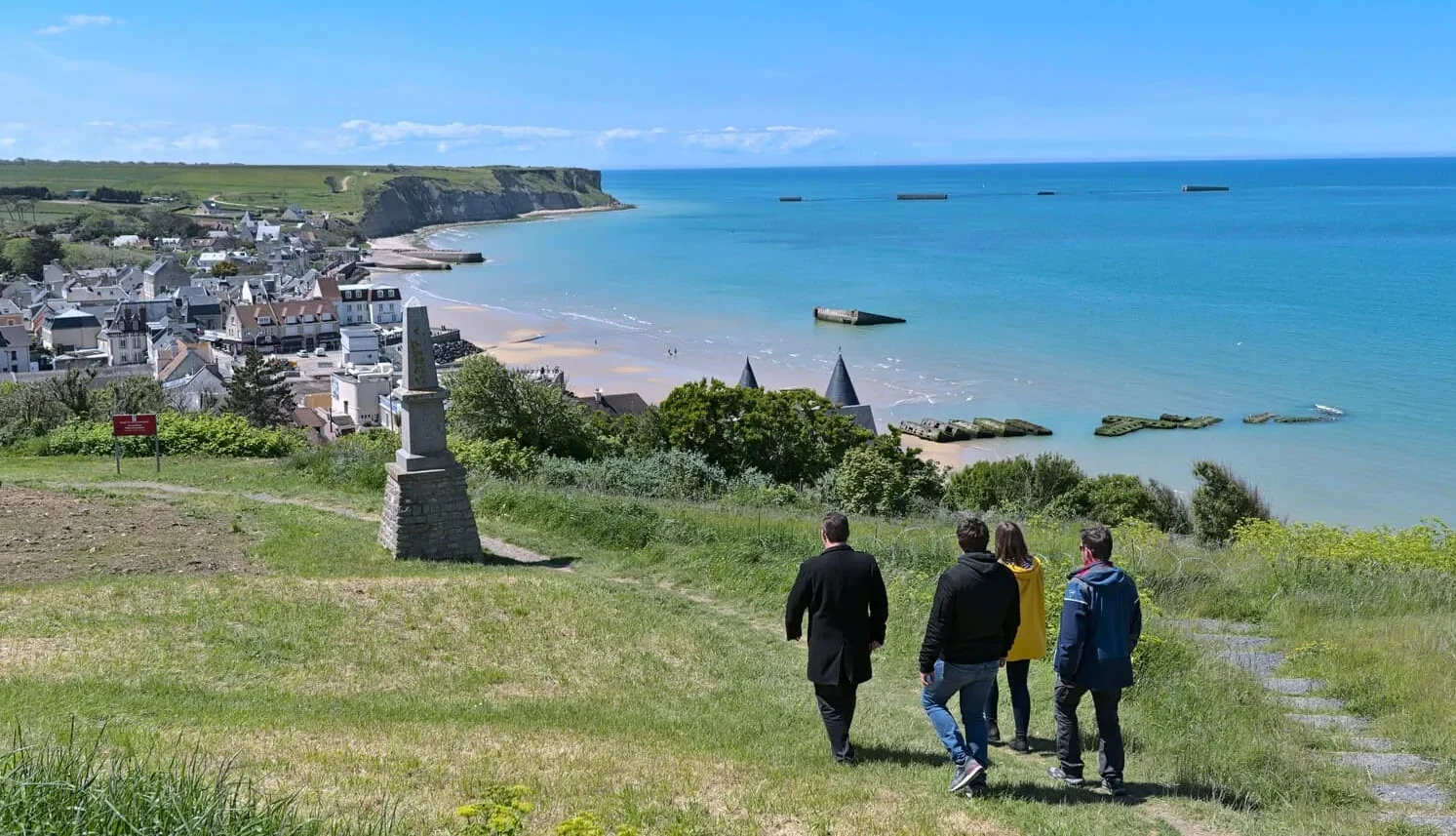
Arromanches was used by the Allies to build an artificial harbour to supply the troops with equipment and ammunition, just a few days after the landings. Today you can still see the remains of the famous Phoenix caissons, the giant concrete blocks that made up the Mulberry Harbours, and even get close to them at low tide. The town is also home to two particularly interesting museums: the Landing Museum, whose reopening in March 2023 will let visitors experience the events of D-Day in virtual reality, and the 360° Cinema, set on the hills above the town, which screens the film “The 100 Days of the Battle of Normandy” across almost nine screens at once.

D-Day walk

D-Day walk

On 6 June 1944, the beaches of Normandy were the scene of one of the fiercest battles in history. The landing of the American army, supported by a detachment of Allied soldiers, under a terrible deluge of fire and blood, led to the liberation of France from Nazi rule. This historic walking tour will allow you to follow in the footsteps of the battle and see the remnants of the war for yourself.
Discover

5) Sainte-Mère-Église

On the night of 5 to 6 June, the paratroopers of the 82nd and 101st US Airborne Divisions rained down on the village of Sainte-Mère-Église in the Manche department, tasked with capturing the roads leading to Utah Beach and quickly establishing a bridgehead. During his jump, paratrooper John Steele became caught on the church steeple; he was cut down and captured by the German soldiers stationed inside, before managing to escape and rejoin his comrades.

Not to be missed: the Airborne Troops Museum, the church and Utah Beach.

6) Pegasus Bridge

North of the city of Caen, along the River Orne, stands the Bénouville bridge, renamed Pegasus Bridge after the Second World War in honour of the British paratroop commandos of the 6th Division, whose emblem was the winged horse Pegasus. They were the first to set foot on French soil on the night of 5 to 6 June, with the mission of seizing the bridge to prevent German reinforcements arriving from the east of the river.

An exact replica of the 1944 bascule bridge was installed in 1994, while the original bridge is displayed right next to it at the Pegasus Memorial.

7) Bayeux

Bayeux is an exception in a Normandy landscape so badly scarred by the war: the town was largely spared the bombing, as the German troops left on 6 June and British soldiers entered without a fight, making Bayeux an ideal base for the Allies.

As a result, the town has kept all the richness of its medieval past, from its narrow streets to its cathedral and its famous tapestry. The Battle of Normandy Museum, meanwhile, recounts the operations in Normandy from 7 June to 29 August 1944 across 2,300 square metres of exhibitions.

The town’s location, just a few kilometres from the beaches and many landing sites, together with its lively atmosphere and characterful centre, make it an ideal starting point for anyone wanting to explore the region.

D-Day express

D-Day express

6 June 1944 was a turning point in the history of the Second World War, with the landing on the beaches of Calvados of thousands of Allied soldiers who came to liberate Europe from Nazi rule. The fighting that took place on that day and in the months that followed left a deep mark on Normandy.
Discover

8) The German Battery at Longues-sur-Mer

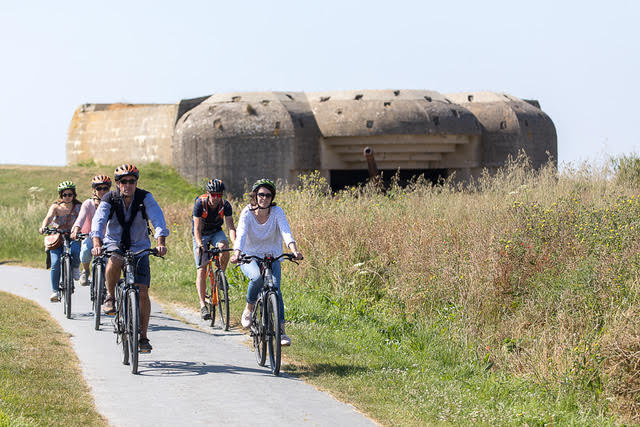
A few kilometres north of Bayeux, you can easily visit the German battery at Longues-sur-Mer. Listed as a historic monument, this defensive complex still has its fire control post as well as four casemates that house the original 150mm guns.

9) The Juno Beach Centre

On the fishing harbour of Courseulles-sur-Mer stands the Juno Beach Centre. Founded in 2003 by veterans and volunteers, this museum tells the story of and pays tribute to the Canadian soldiers who fought in Normandy and around the world during the Second World War. It also reveals the war effort made by civilians through those hard years.

A long week end on the landing beaches

A long week end on the landing beaches

This cycling route connecting Caen, Courseulles-sur-Mer, Port-en-Bessin, and Bayeux offers a truly timeless escape. Over three days, the gentle pace of cycling allows you to fully immerse yourself in the Normandy countryside, alternating between the coast, the countryside, and unspoiled natural areas.
Discover

10) Carentan

It took the Allied troops six days to liberate the town of Carentan and link up the Omaha and Utah beaches. The town still bears deep scars from this bloody fighting. The Normandy Victory Museum recounts the events of the town’s capture as well as the Battle of the Hedgerows, the name given to the fighting between American and German soldiers in the Normandy bocage from June to mid-July 1944. The museum also gives pride of place to civilians and to the role of women during the battle.

While far from exhaustive, this article is a good starting point for anyone wanting to explore the history of the Allied landings in Normandy. All the places mentioned above are part of our self-guided walking and cycling itineraries, so feel free to browse the rest of our site or get in touch directly to plan your next active holiday in Normandy.
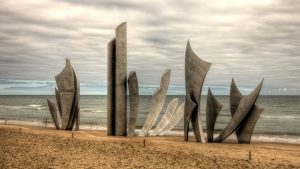
Omaha Beach on the Normandy coast

à lire aussi