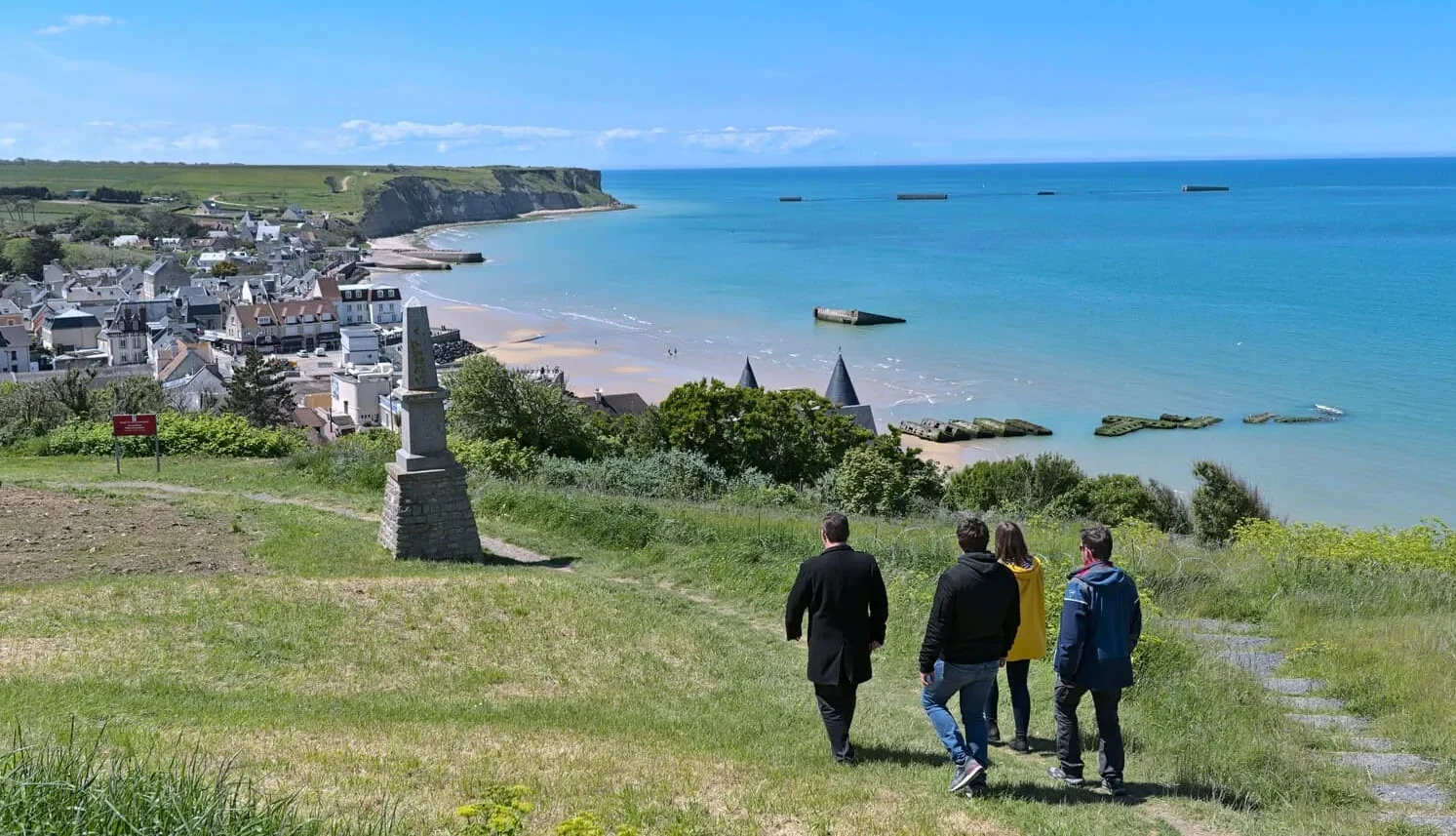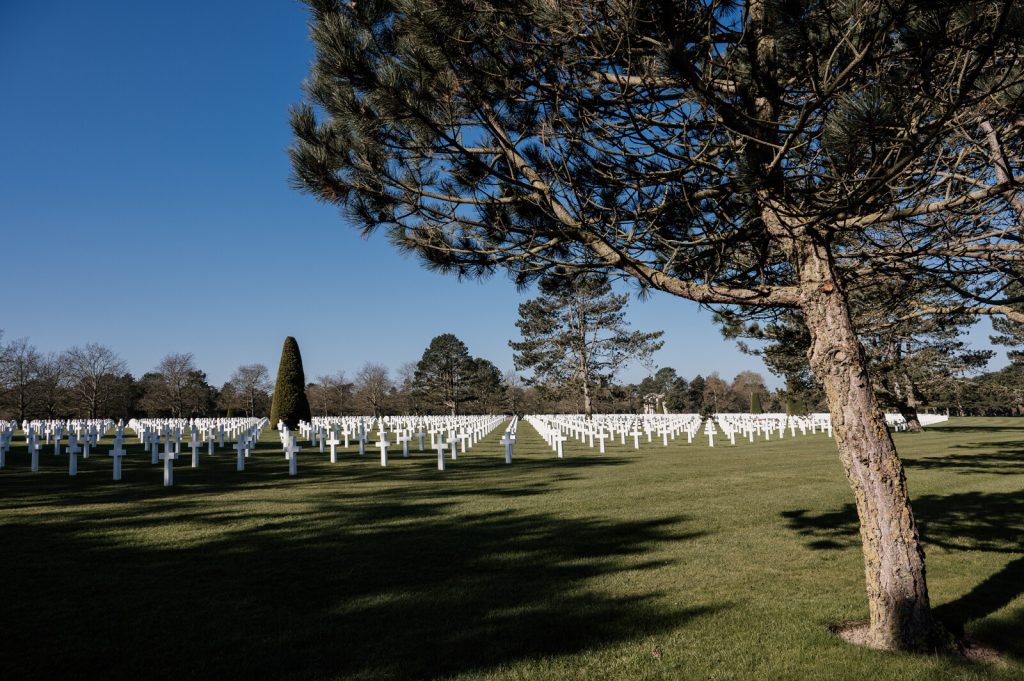
An Omaha Beach visit holds two opposite truths at once. This is the sector where the D-Day landings came closest to failing, at the highest cost — and it is also, today, an open Norman beach where children dig at low tide and riders let their horses run at the water line. Neither truth cancels the other. The visitors who get the most from Omaha are the ones who come prepared for both: the graves on the bluff, and the enormous, wind-scoured beauty of the place.
Here is how we suggest spending a day — or better, two — on this stretch of coast, drawn from the itineraries we walk and ride with our clients every season.
One beach, three villages
Omaha is close to seven kilometres of unbroken sand, held between the cliffs of Vierville-sur-Mer in the west and Colleville-sur-Mer in the east, with Saint-Laurent-sur-Mer in the middle. Behind the beach, a line of bluffs — the feature that made 6 June 1944 so murderous here. The American planners cut the sand into coded sectors, Dog through Fox, names you will still find on memorials all along the seafront road.
Keep that geography in mind and the visit organises itself: cemetery and museums on the Colleville end, Les Braves and the memorial museum in the middle at Saint-Laurent, the German casemate and the ramp the survivors fought up at Vierville. Walking from one end to the other takes about a morning. That walk is the visit, in our opinion — everything else hangs from it.
The Normandy American Cemetery
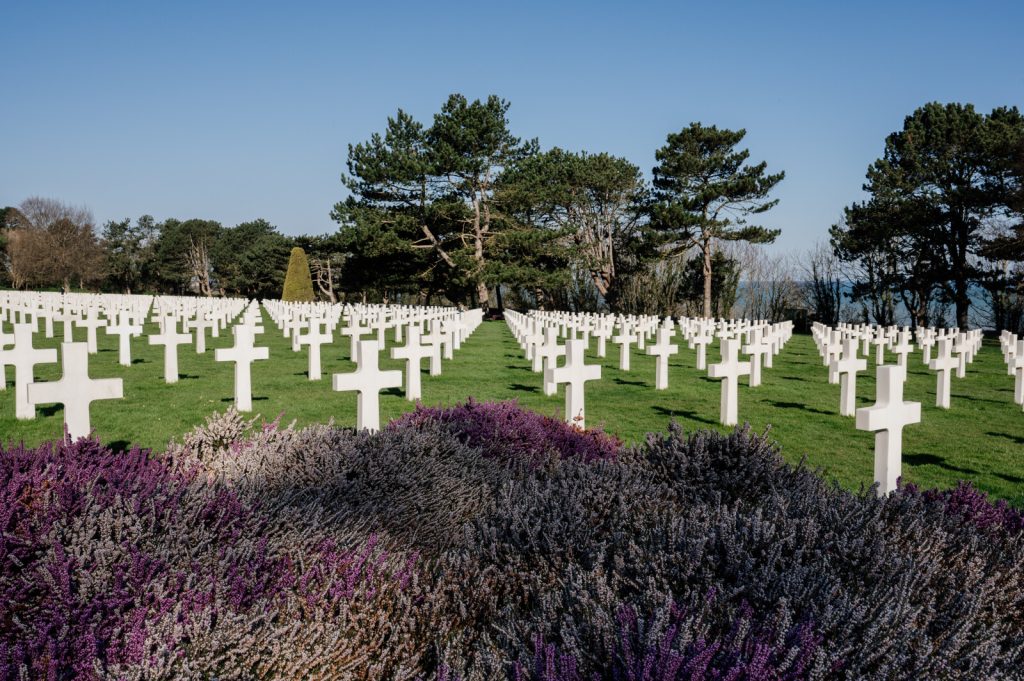
On the bluff above the eastern end of the beach, at Colleville-sur-Mer, the American cemetery holds 9,389 graves in perfectly kept lawn, with the names of 1,557 missing inscribed in the memorial garden. Entry is free. The site is open every day except 25 December and 1 January, from 9am to 6pm between mid-April and mid-September, and to 5pm the rest of the year.
Two practical notes. First, come at opening if you possibly can: by mid-morning in season the car park is full and the mood changes. At 9am you hear the wind, the halyards and not much else. Second, allow real time for the visitor centre — its exhibits put faces and letters to the headstones, and the visit lands differently afterwards.
On the sand: Les Braves
Down at Saint-Laurent-sur-Mer, planted directly in the sand, stand the steel wings of Les Braves. The sculptor Anilore Banon created the work for the 60th anniversary of the landings, and its three elements carry their names like a manifesto: the Wings of Hope, Rise Freedom, the Wings of Fraternity. At high water the sea reaches it; at low tide it stands stranded and enormous in the middle of the beach. Photographers plan whole days around that cycle.
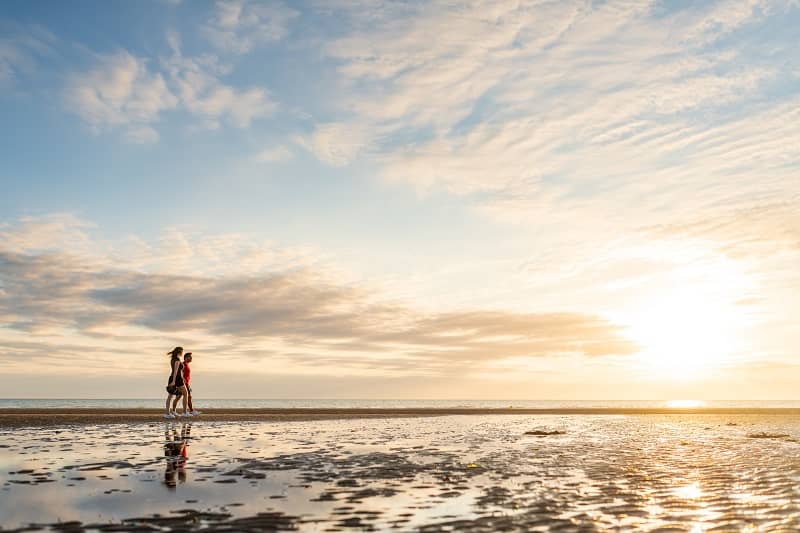
Then walk. The tide runs out a very long way here, and the firm sand at low water is the best surface on the coast for covering distance. Check the tide times in the morning — the beach you see at noon is not the beach you will see at six.
Two museums, two purposes
The Musée Mémorial d’Omaha Beach sits 200 metres behind the beach at Saint-Laurent: 1,400 square metres of uniforms, personal effects and first-hand accounts, closest in spirit to the men who landed. The Overlord Museum, by the roundabout 500 metres from the cemetery at Colleville, is the hardware collection — more than 10,000 pieces and some forty tanks, guns and vehicles, in a museum opened in 2013. History told through pockets, or history told through machines. With a full day you can honestly do both; with half a day, choose by temperament.
The trails above the beach
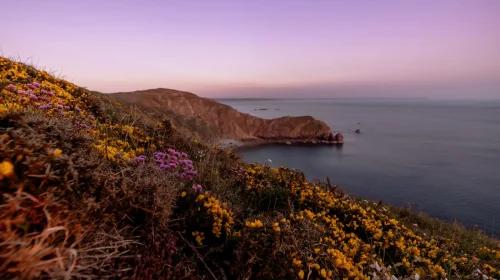
The paths along the bluffs are where Omaha becomes a walker’s destination rather than a coach stop. West of Vierville, the coastal path runs towards the Pointe du Hoc through fields still pocked with craters; eastward, lanes climb from the beach through the draws — the ravines that were the only exits on D-Day — towards Colleville. This is the ground our walking clients talk about at dinner: not the car parks, the in-between.
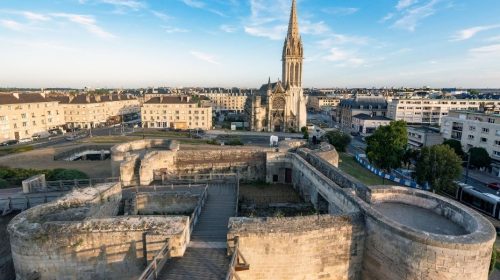
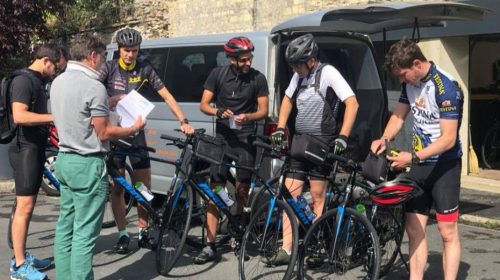
Our D-Day walk spends five days on exactly this country between Arromanches and Bayeux, hotels booked and luggage moved for you. Cyclists cross Omaha on a long cycling weekend from Caen, or as one stage of the week-long road to Freedom to Cherbourg. And if you are still weighing options, all our self-guided D-Day tours sit on one page.