Let’s explore the most delicious culinary specialities of Normandy together. You’ll find these iconic local products at the producers themselves, but also in supermarkets.
Normandy dairy products
Isigny butter, AOC
Famous the world over, Isigny butter owes its reputation to its flavour, but also to the craftsmanship that goes into making it. Used by the finest chefs, it works beautifully in any dish. Smooth yet supple, it has the rare quality of staying stable when cooked. This is an exceptional butter, and it owes its distinctive taste to the mild, temperate seaside climate, which produces grass rich in minerals and trace elements. That richness passes into the cows’ milk and, in turn, into the butter.
Isigny cream, AOC
Born of a unique terroir between land and sea, Isigny cream shares the same qualities as Isigny butter. Its AOC label (a protected designation of origin) guarantees genuine provenance and faultless quality.
Camembert AOC
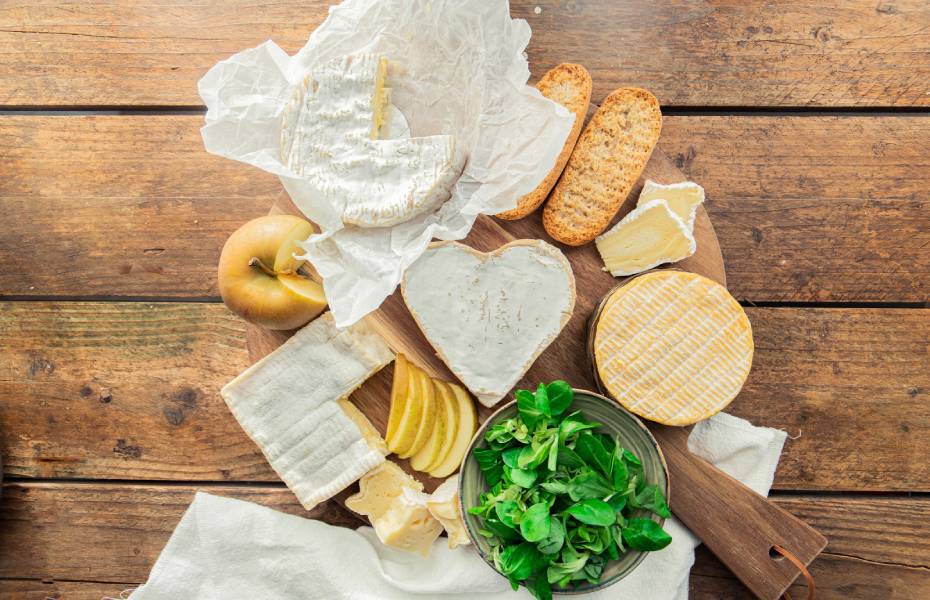
With its delicate white rind and soft, runny centre, camembert has earned a firm place on French tables, and well beyond. This raw cow’s milk cheese is enjoyed and sought after abroad too. Unlike other cheeses, camembert is ladled into its mould by hand. It takes its name from the village of Camembert, in Lower Normandy, where the cheese is said to have first been made.
Normandy drinks
Apple juice
A true ambassador for Normandy, apple juice is loved by young and old alike, and it’s easy to see why. Its sweet, indulgent taste makes it wonderfully versatile. At breakfast, teatime, with a meal or to mark a celebration, apple juice never goes out of style. Since every variety of apple tastes a little different, so does every juice. Now it’s up to you to find the one you love.
Normandy cider
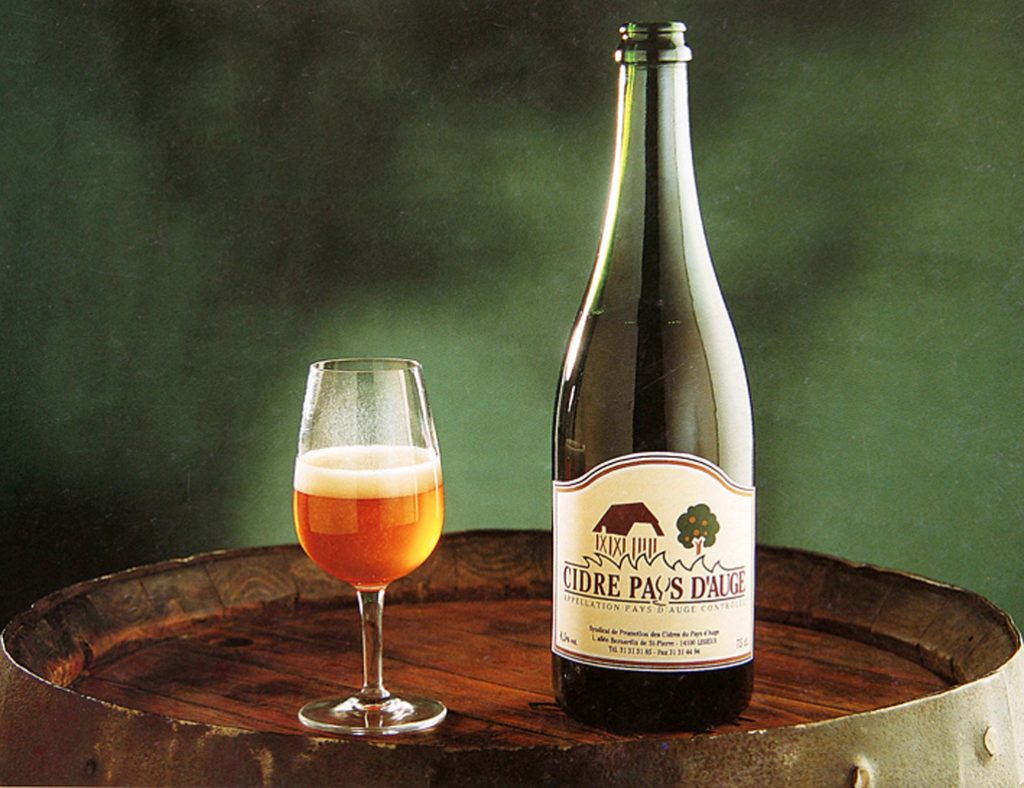
From apple juice we move on to cider, thanks to alcoholic fermentation. Usually between 2% and 5% alcohol, cider is often drunk with meals. You can uncover all the secrets of cider-making by visiting a cider farm, and Normandy has plenty of them! Why not stop by the Clos Vaudor on a guided cycling day in Normandy? Based in Cambremer (Calvados), on the cider route, Alain Sauvage produces cider and pommeau and specialises in organic products. Alain will be delighted to welcome you and share a tasting of his wares.
Calvados
Calvados, the celebrated apple brandy, is produced by distilling cider in a still and ageing it in oak casks for at least two years. Depending on the designation sought (AOC Calvados, AOC Calvados Pays d’Auge, AOC Calvados Domfrontais), the producer may choose to distil the cider once or more than once.
Normandy desserts
Teurgoule
A genuine Normandy dessert, teurgoule doesn’t seem especially local at first glance. And for good reason: its main ingredients, rice and cinnamon, don’t come from the region. Even so, its Normandy roots are real, because these ingredients were part of the plunder seized by Norman privateers in the 17th century from Spanish galleons sailing home from the New World.
The Trou Normand
A gastronomic tradition that involves drinking a small glass of Calvados between courses, the Trou Normand is meant to aid digestion and revive the appetite for the dishes still to come. Pour a splash of Calvados into a glass, add an apple sorbet soaked in Calvados, and your Trou Normand is ready! Do try this wonderful treat on a walking tour of the Calvados region.
Normandy dishes
Normandy escalope
Originally from Normandy, escalope à la normande is an easy dish to make, inexpensive and hearty. You can prepare it with turkey, chicken or veal escalopes. The recipe brings together local ingredients such as apples, Calvados and Normandy crème fraîche. A real treat for the taste buds!
Tripes à la mode de Caen
Even the name sounds Norman! Its origins go back to the time of William the Conqueror, in the 11th century. We owe the dish to his cook, Sidoine Benoit, who is said to have devised the recipe at the Abbaye aux Hommes (in Calvados). Made with the four chambers of a ruminant’s stomach (the rumen, omasum, reticulum and abomasum) along with an ox foot, tripes à la mode de Caen can put younger diners off. But only those brave enough to try it will discover the wonderful flavour of its sauce, nicknamed “La Tripiere d’Or”.
The Mere Poulard omelette
Who hasn’t heard of the famous Mere Poulard omelette? The story of this recipe goes back to 1888, when Annette Poulard opened her inn within Mont-Saint-Michel to welcome hungry pilgrims and offer them a little comfort with an omelette cooked over a wood fire, a recipe that has endured ever since. What makes it so special? The secret of the Mere Poulard omelette is said to lie chiefly in the use of a long-handled pan set over a wood fire, so that the omelette cooks evenly on every side. Some mention egg whites whisked to stiff peaks and folded into the whole eggs. Today you can enjoy the Mere Poulard experience yourself on a cycling holiday, at the restaurant of the same name at Mont-Saint-Michel.
Andouille de Vire
An emblematic Normandy charcuterie, andouille de Vire, which hails from the town of Vire, owes its fame to an artisanal production drawing on know-how handed down since the 18th century. This andouille is made from a whole pig’s intestine with no added fat. The strips of casing are assembled after being cleaned, cut, salted and left to macerate for several days. It is quite distinct from its Breton cousin.