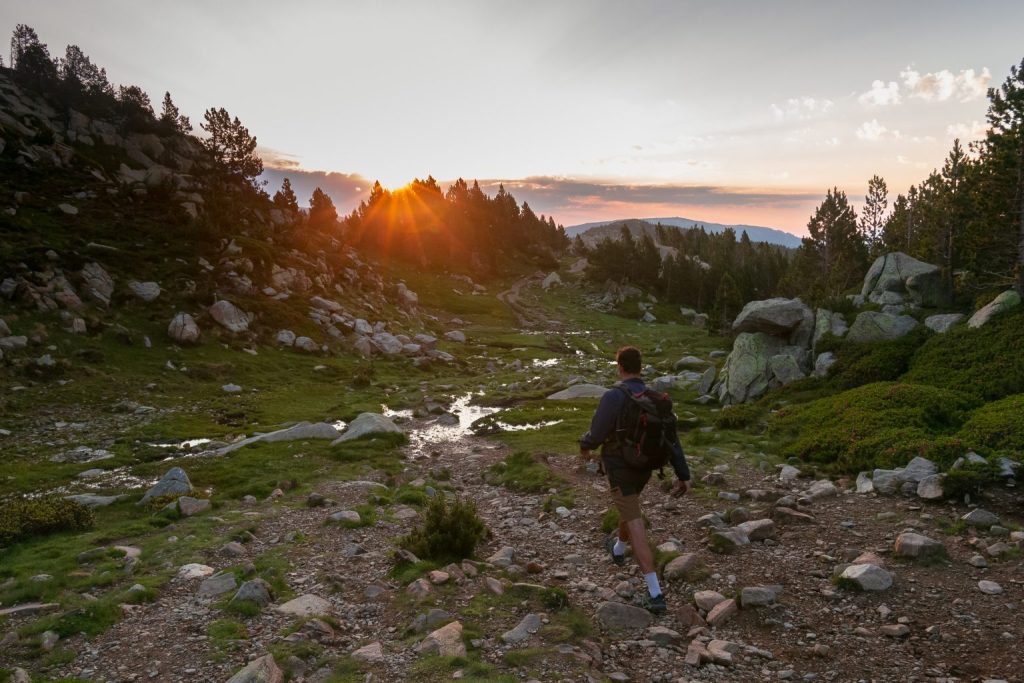
That’s it! You’ve booked your hiking trip to Normandy/Brittany with your favourite travel agency! No need to worry about accommodation or transporting your luggage, they’ll take care of it! All you have to do is put on a good pair of shoes, grab your rucksack and hit the trails! But now you may be wondering what to pack in your bag to make the most of your days safely and without overloading yourself!
From choosing a bag to clothing, food, drinks and accessories, we’ll explain everything!

1) The Bag
This is the essential item for any hike, from a weekend in Brittany to a trek in the Himalayas. Your rucksack must be suited to the adventure you are embarking on: for day hikes, choose a rucksack between 20 and 30 litres, which is more than enough to carry clothes, sandwiches, drinks and souvenirs bought along the way! Don’t forget to ask your sales assistant for advice and try it on before you buy: size and stature are important factors when choosing a rucksack!
Another point to consider is the adjustment: start by loosening all the straps on your bag, put it on (preferably loaded) and tighten your waist strap. The latter should rest on your hips. Then adjust your shoulder straps, without tightening them too much to avoid shoulder pain. Finish by adjusting your chest strap and you’re ready to go!

2) Clothing
As you may already know, experiencing all four seasons in a single day’s walk is quite common, especially if you’re hiking in the mountains or by the sea! Having the right clothing can make all the difference and prevent your trip from turning into an episode of Bear Grylls.
- Footwear: Choose hiking boots that fit well, are breathable and have good soles to absorb shock and protect your joints. Gore-Tex boots will keep your feet dry, which is a significant advantage depending on the season and where you are going! Once again, don’t hesitate to ask your sales assistant for advice. One last tip: don’t embark on a multi-day hike with shoes you’ve never worn before (blisters guaranteed)! Try them on and wear them before you leave to get your feet used to them!
- Clothing: Choose breathable fabrics that are suitable for physical activity: technical T-shirts made of polyester or Lycra, for example, or lightweight cargo trousers and/or shorts with multiple pockets. Even in the height of summer, in Brittany and Normandy for example, mornings can be cool and the weather can change quickly, so also bring a windbreaker, waterproof jacket and something warm to keep you from getting cold during meal breaks and visits. A good down jacket (warm, lightweight and very easy to pack) or a small merino wool jumper are the best choices. A spare pair of socks is always welcome (you never know when you might slip in a puddle, and there’s no worse feeling when hiking than having your feet squelch with every step).

5) Accessories
Your agency has provided you with logbooks and maps so that you don’t get lost and can study your itinerary in advance: Take a few minutes each morning to visualise the day’s route and avoid having to take out your maps every two minutes.
Here is a short, non-exhaustive list of a few accessories that may prove useful to any hiker, whether novice or experienced:
- A mobile phone (fully charged) and its charger.
- A list of emergency contact numbers: your agency’s number, your local contact’s number, emergency services (Police: 17, Fire brigade: 18).
- A knife (the sausage won’t cut itself!)
Your identity documents, some cash - A small bin bag for your rubbish, especially if you’re having a picnic!
- Sun cream and sunglasses
- A small first aid kit (containing plasters, scissors, disinfectant, etc.), easily found in sports shops.
There you go, you’re all set to hike safely and explore the areas around you! This article is not exhaustive and is tailored to hikers setting off on day trips on trails that are not particularly technical, but I hope it will help you invest in durable, high-quality equipment, anticipate any potential problems and make the most of your trip!
3) Food
A more personal topic that is specific to each of us. On the one hand, there are those who enjoy sandwiches by the trail or with a beautiful sea view, and on the other, those who prefer to stop at a restaurant to discover local specialities, and those who will do both during their stay! In any case, bring snacks for the road: dried fruit, cereal bars, biscuits or sausage (great for morale). This will prevent you from feeling sluggish and you will enjoy your day much more!

4) Beverages
As with food, it comes down to personal preference. I recommend having at least 1 litre of water per person, depending on the distance, terrain and weather conditions. Staying properly hydrated before, during and after exercise is essential for any physical activity. Don’t wait until you feel thirsty to start drinking and empty your bottle in two minutes, but rather take small, regular sips throughout the day!

5) Accessories
Your agency has provided you with logbooks and maps so that you don’t get lost and can study your itinerary in advance: Take a few minutes each morning to visualise the day’s route and avoid having to take out your maps every two minutes.
Here is a short, non-exhaustive list of a few accessories that may prove useful to any hiker, whether novice or experienced:
- A mobile phone (fully charged) and its charger.
- A list of emergency contact numbers: your agency’s number, your local contact’s number, emergency services (Police: 17, Fire brigade: 18).
- A knife (the sausage won’t cut itself!)
Your identity documents, some cash - A small bin bag for your rubbish, especially if you’re having a picnic!
- Sun cream and sunglasses
- A small first aid kit (containing plasters, scissors, disinfectant, etc.), easily found in sports shops.
There you go, you’re all set to hike safely and explore the areas around you! This article is not exhaustive and is tailored to hikers setting off on day trips on trails that are not particularly technical, but I hope it will help you invest in durable, high-quality equipment, anticipate any potential problems and make the most of your trip!