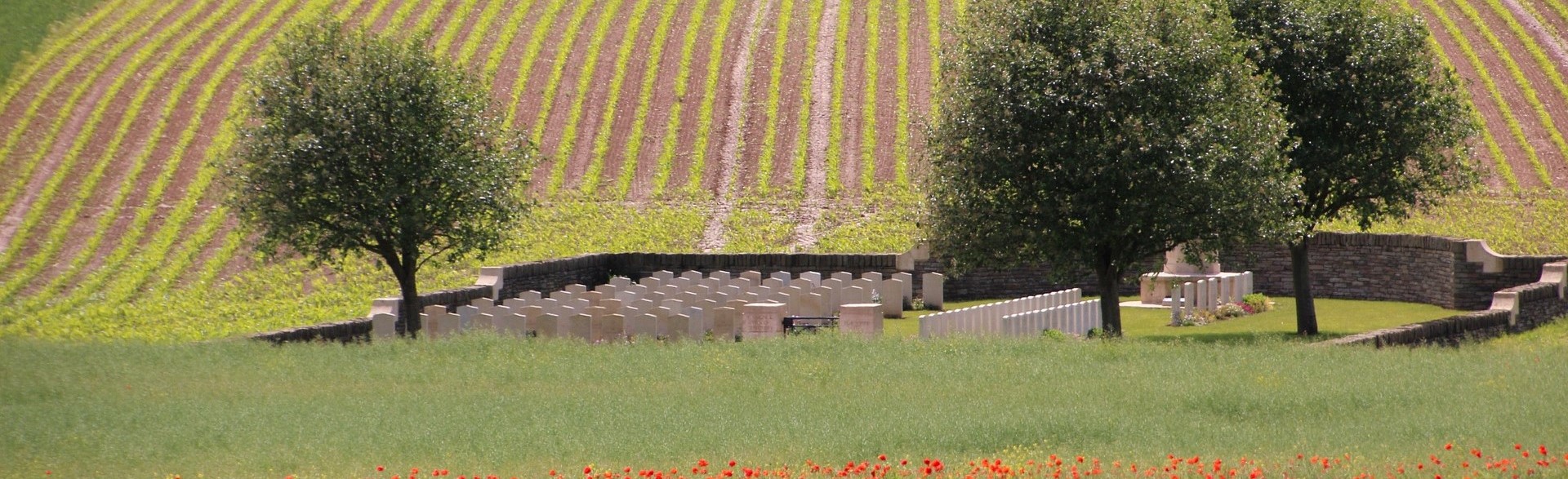
Gallipoli is the word every Australian and New Zealander grows up with. France is the harder truth behind it: this is where the AIF spent the rest of the war, and where most of its dead still lie. An ANZAC pilgrimage in France follows a belt of quiet farmland between Amiens, Albert and Arras — Villers-Bretonneux, Le Hamel, Pozières, Bullecourt — where the names on the memorials are Australian, the school gate says so in English, and almost nobody else is walking.
We are a Normandy-based operator, and this is the trip in our range we speak about most carefully. You do not « do » these places. You walk to them, stand a while, and walk on — and our job is simply to make that walking easy: hotels booked, luggage moved each morning, GPS route in your pocket, help at the end of a phone seven days a week.
The case for walking it
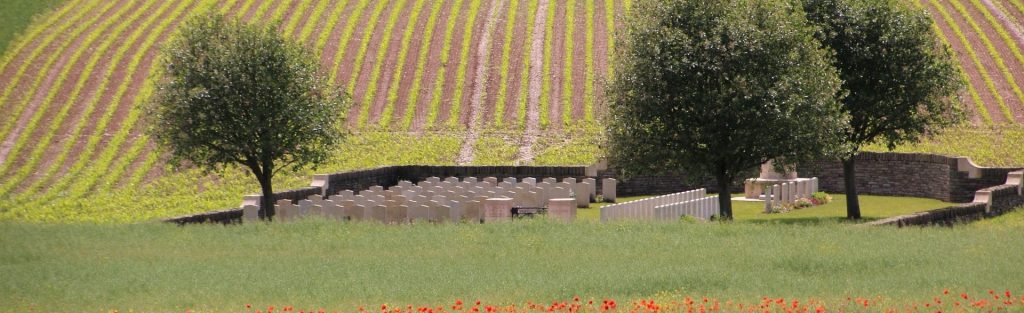
The numbers set the tone. On the Australian National Memorial at Villers-Bretonneux are the names of 10,773 men of the Australian Imperial Force who died in France and have no known grave. At Pozières, in six weeks of the summer of 1916, the AIF took some 23,000 casualties along one low ridge — ground the official historian Charles Bean called « more densely sown with Australian sacrifice than any other spot on earth ».
A car covers these distances in minutes and mislays their meaning. On foot, the intervals between villages become what they were: marching country. Australians who walk it with us say the same thing at the end — the sites moved them, but it was the fields in between that made it a pilgrimage.
The route has a name, too: the Australian Remembrance Trail, which threads the national sites from Ypres in Belgium down through Fromelles, Bullecourt and Pozières to Villers-Bretonneux. Our walking itinerary covers its French heart at three kilometres an hour.
The places, and what they hold
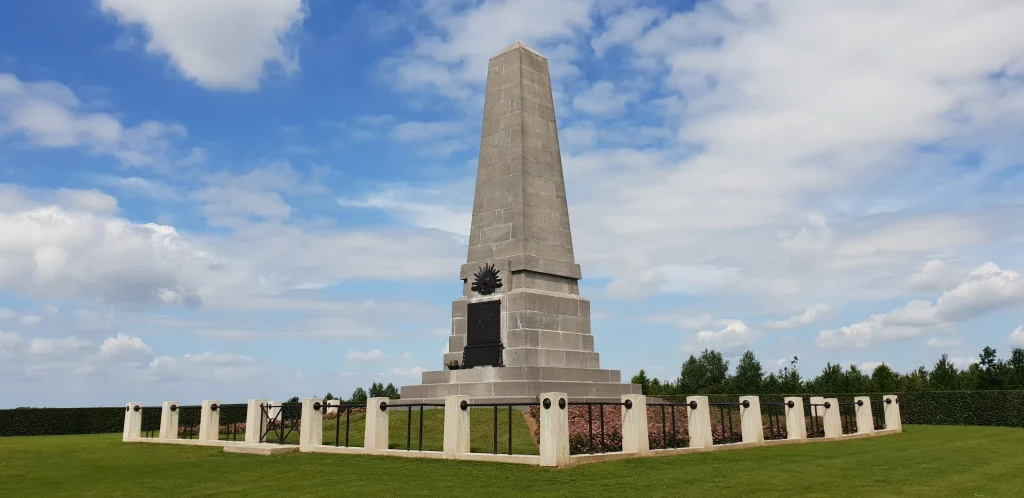
Villers-Bretonneux. The Australian National Memorial stands on the ridge above the town: a Lutyens tower flanked by walls of names, unveiled by King George VI in 1938. Since April 2018 the Sir John Monash Centre behind it has told the Australian story of the Western Front in full. Down in the town, the rebuilt Victoria School still carries its schoolyard inscription — DO NOT FORGET AUSTRALIA — and the town, more than a century on, visibly has not.
Le Hamel. On the next ridge east, the Australian Corps Memorial marks the battle of 4 July 1918 — the first fought under John Monash’s own command, planned to take ninety minutes and famously finished in about ninety-three. It is the most hopeful site on the trail: the one where the learning finally outran the cost.
Pozières. A village, a windmill mound, and more Australian loss per metre than anywhere on earth. The 1st Division memorial stands here; the windmill site, stripped to its grass mound, is the place to stand with Bean’s sentence in your head.
Bullecourt. Twice in the spring of 1917 the AIF was thrown against the Hindenburg Line here. The bronze Digger of the memorial looks out over the fields today, and the Jean and Denise Letaille Museum in the village keeps the battle’s objects — brought in, for decades, by the farmers who kept finding them.
Amiens makes the natural gateway and first base, with Albert as the walking hub of the Somme country. Both are small, unhurried towns where an evening does you good after a day like these.
The trips: on foot at pilgrimage pace, or by bike across the whole front
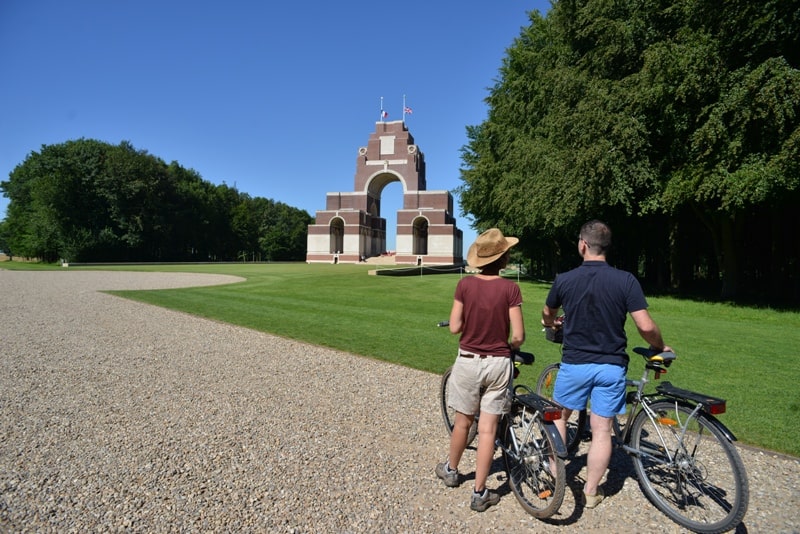
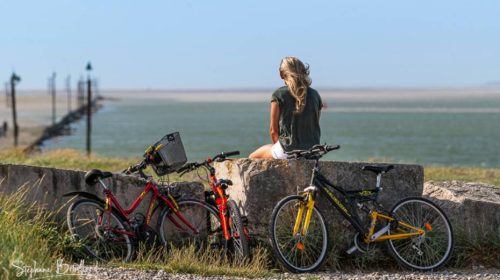
Our ANZAC itinerary is a six-day walk, Amiens to Albert, built around the Australian sites. Around it sit four more Great War trips — the Somme on foot or by bike, the Canadian memorial country around Arras, and the long ride across the whole front from Amiens to Bruges.
| Trip | How | Duration | Route | From (pp) |
|---|---|---|---|---|
| Paths of Remembrance: Honouring Canadians | On foot | 4 days / 3 nights | Arras → Albert | €420 |
| The Paths of Remembrance: ANZAC | On foot | 6 days / 5 nights | Amiens → Albert | €620 |
| The Great War: The Battle of the Somme | Bike | 5 days / 4 nights | Amiens → Arras | €680 |
| The Paths of Remembrance: The Battle of the Somme | On foot | 8 days / 7 nights | Amiens → Arras | €920 |
| 14-18 The Western Front: Amiens to Bruges | Bike | 8 days / 7 nights | Amiens → Bruges | €1,300 |
All prices are « from », per person, as shown on each trip page.