The travel agency specialising in self guiding cycling and walking holidays!

14-18 The Western Front: From Amiens to Bruges

une aventure humaine et passionnée

Amiens
Bruges
8 days / 7 nights
Challenging
From April to October

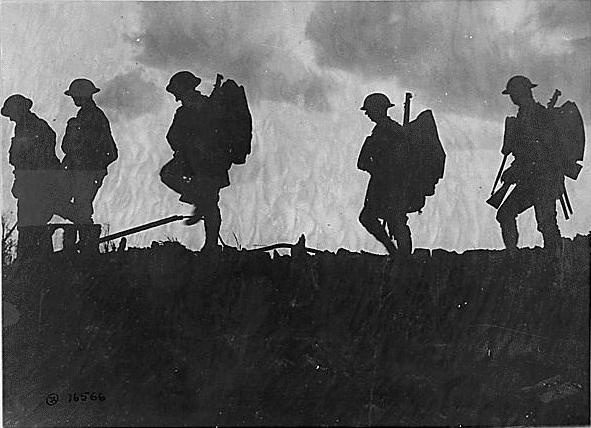
This cycling trip will take you to a land that was the scene of terrible battles during the First World War. This cycling adventure from Amiens to Bruges will allow you to fully appreciate the scale of these tragic events as you cross former battlefields and visit museums and memorial sites. A cycle tour focused on remembrance and the history of the men and women who lived through these events. On a happier note, and on comfortable cycle paths, you will also pass through magnificent towns that bear witness to the region’s prosperous trading past, and sample the gastronomic specialities of the North, such as Welsh rarebit, chips, abbey beer and carbonnade. Flamande.

Discover Amiens and the battlefields of the Somme

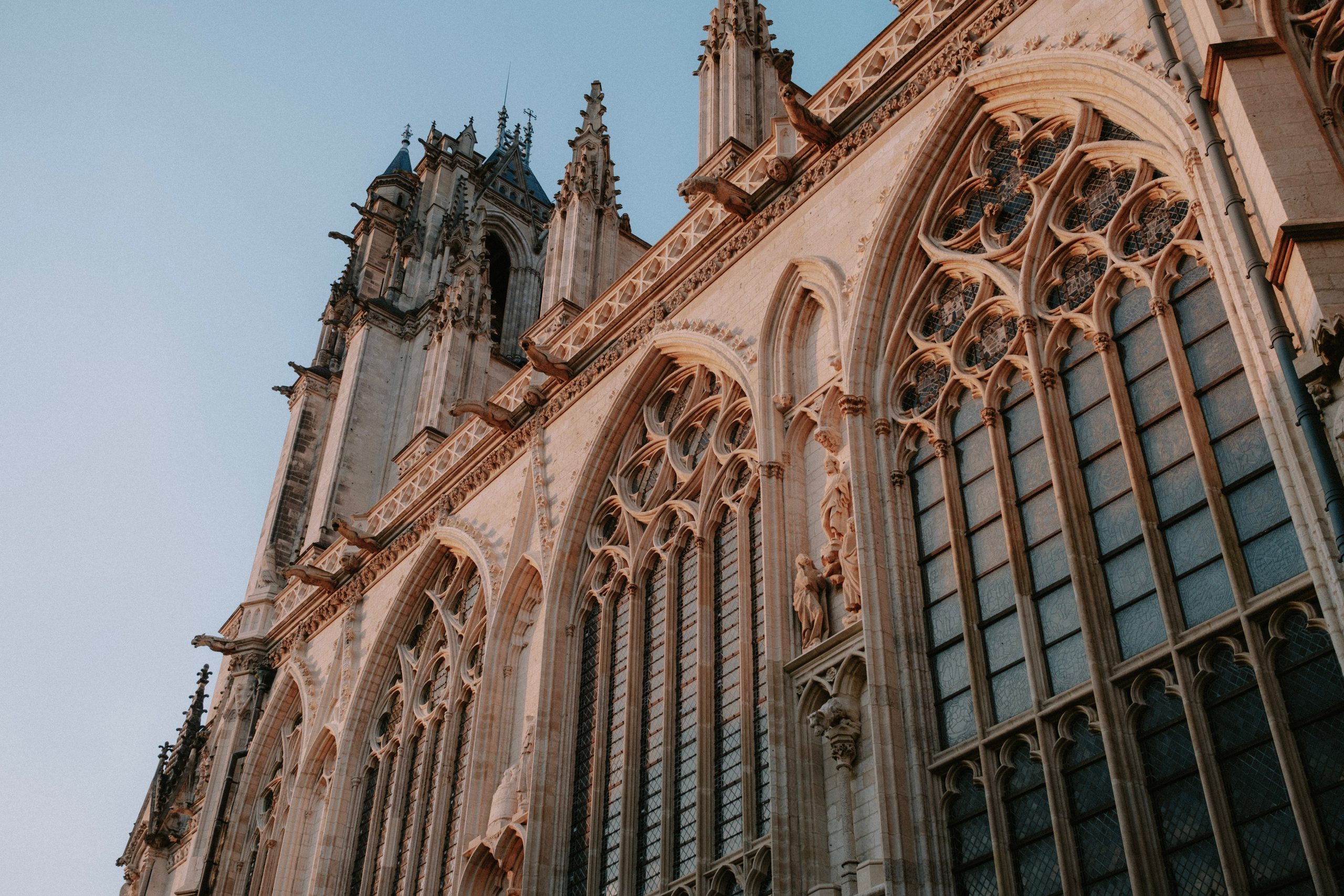
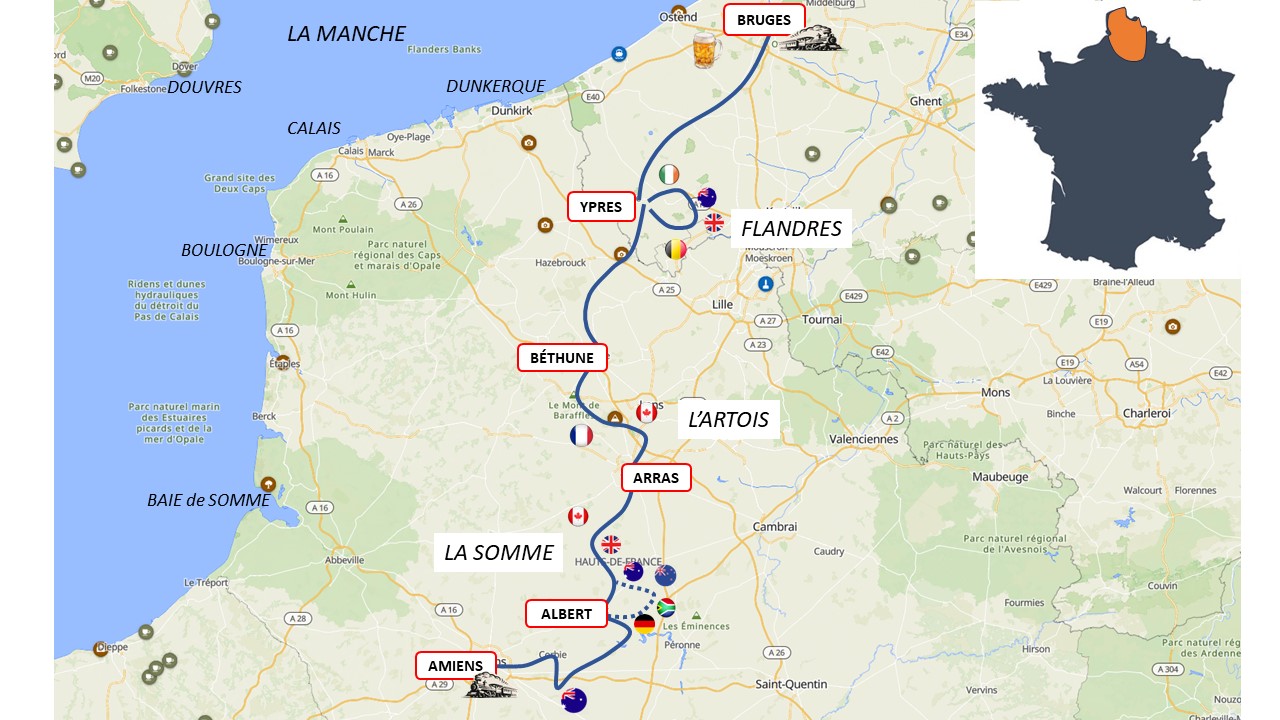
Your sporting holiday begins in Amiens. The magnificent cathedral is a UNESCO World Heritage Site. From Amiens, you will travel about 50 km to reach Albert along the Somme. On this route, you will discover the Australian National Memorial and the Franco-Australian Museum at Victoria School, and visit the Hamel battlefield where the Second Battle of the Somme took place in 1918.

In Albert, don’t miss the Somme 1916 Museum, located underground, and the National Necropolis. On leaving Albert, you will pass the Thiepval Memorial, a place of remembrance for British soldiers who fell during the First World War, and the Belfast Tower, dedicated to the Irish soldiers of the Ulster Battalion. You will then pass through Longueval before arriving in Arras in the Pas-de-Calais department. Arras will charm you with the architecture of its town centre, its magnificent belfry and its Vauban citadel, both of which are UNESCO World Heritage Sites.

From Arras, you will head north, after the Scarpe River, to the hill of Lorette, where you can visit the Notre-Dame-de-Lorette cemetery. Continuing north, your bike ride will take you to Béthune, where you will spend the night.

Discovering Flanders by bicycle

Leaving Béthune the next day, you arrive in French Flanders where you will discover the region’s gastronomic specialities. You then continue towards the Belgian border, entering the Flemish region to end your day’s cycling in Ypres. From this charming town, the capital of cloth craftsmanship, which saw five major battles during the war, the route takes you around Zonnebeke, Passchendaele and Langemark Poelkapelle, important memorial sites dedicated to soldiers from around the world who fought on these lands.

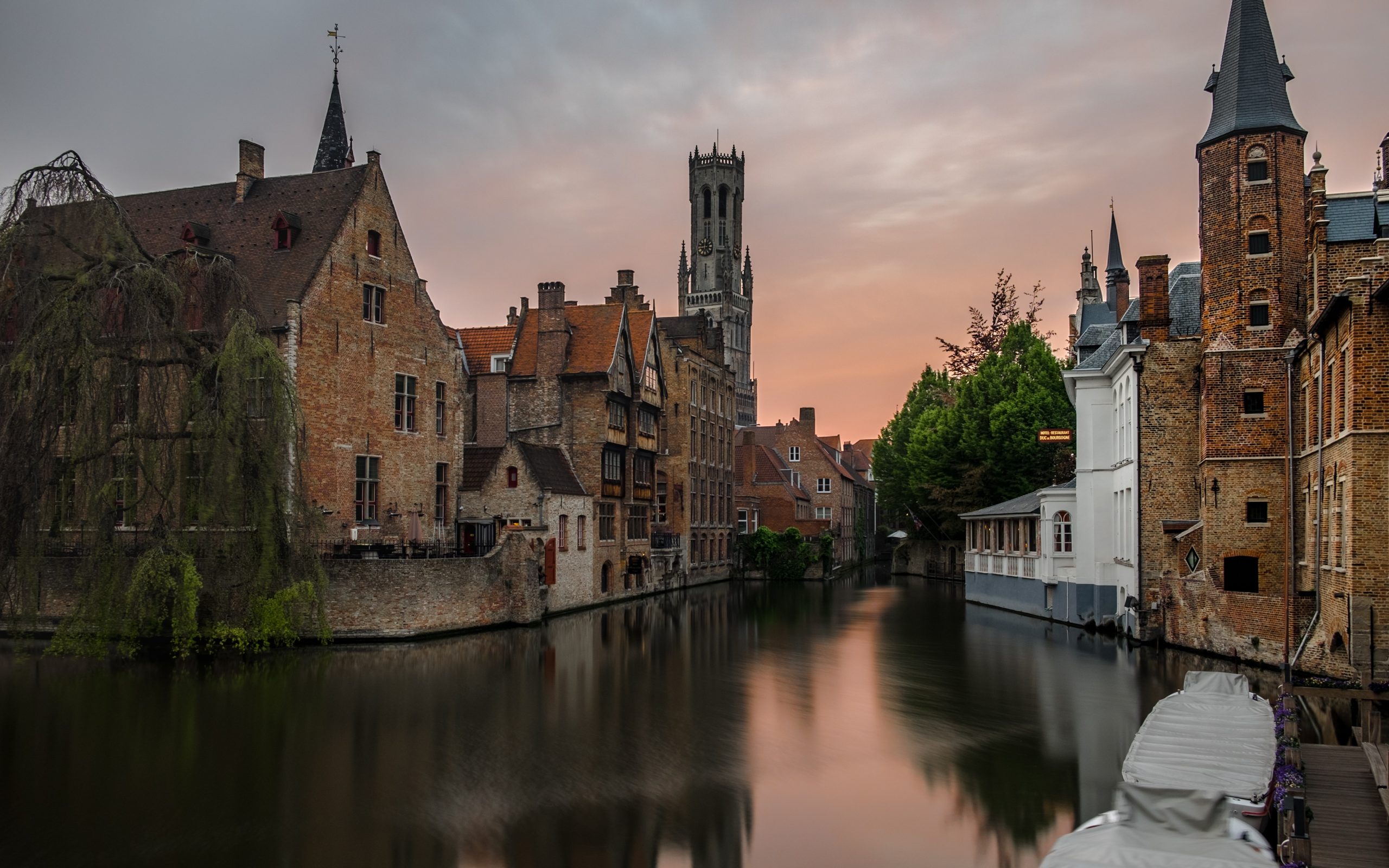
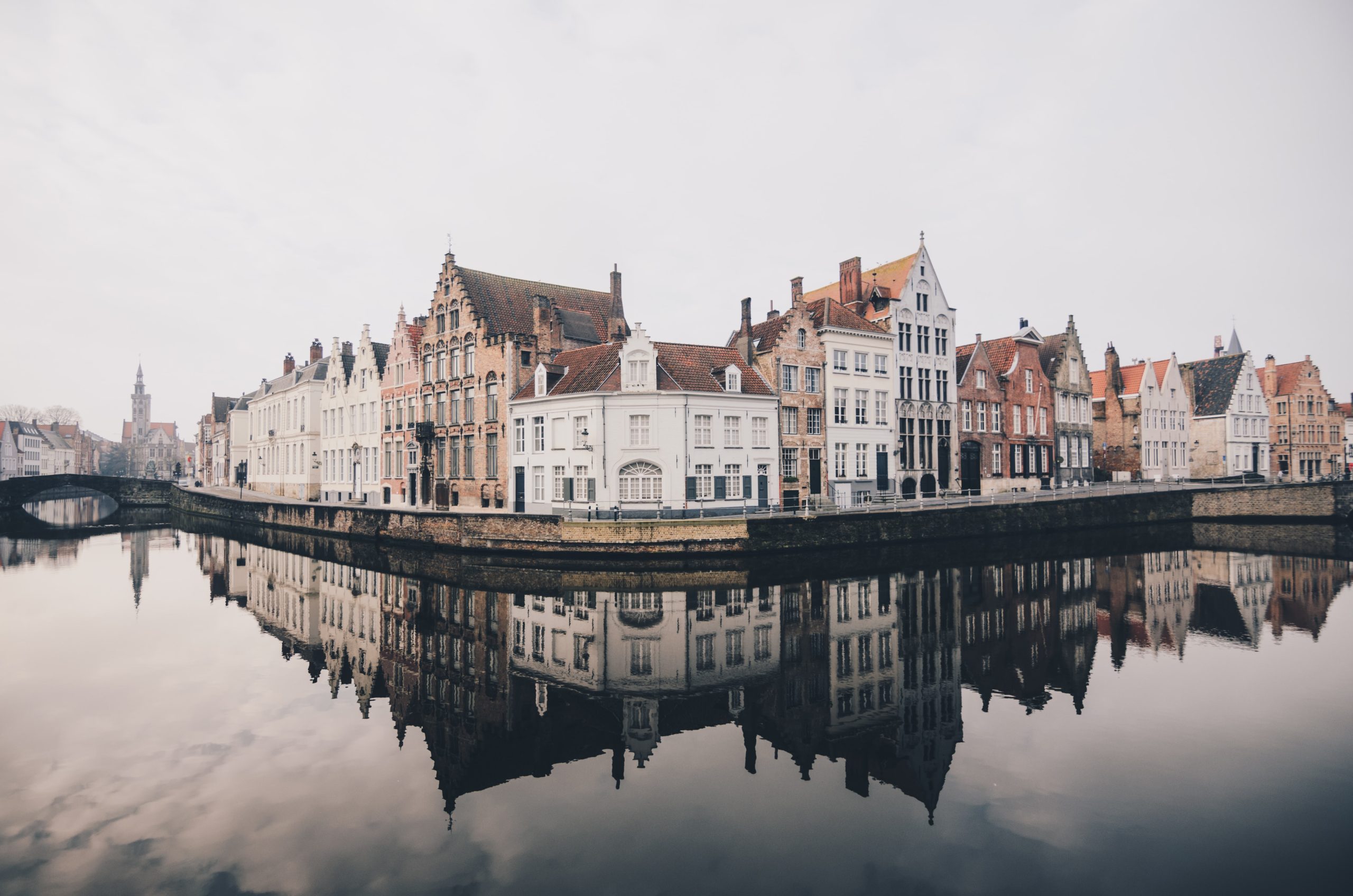
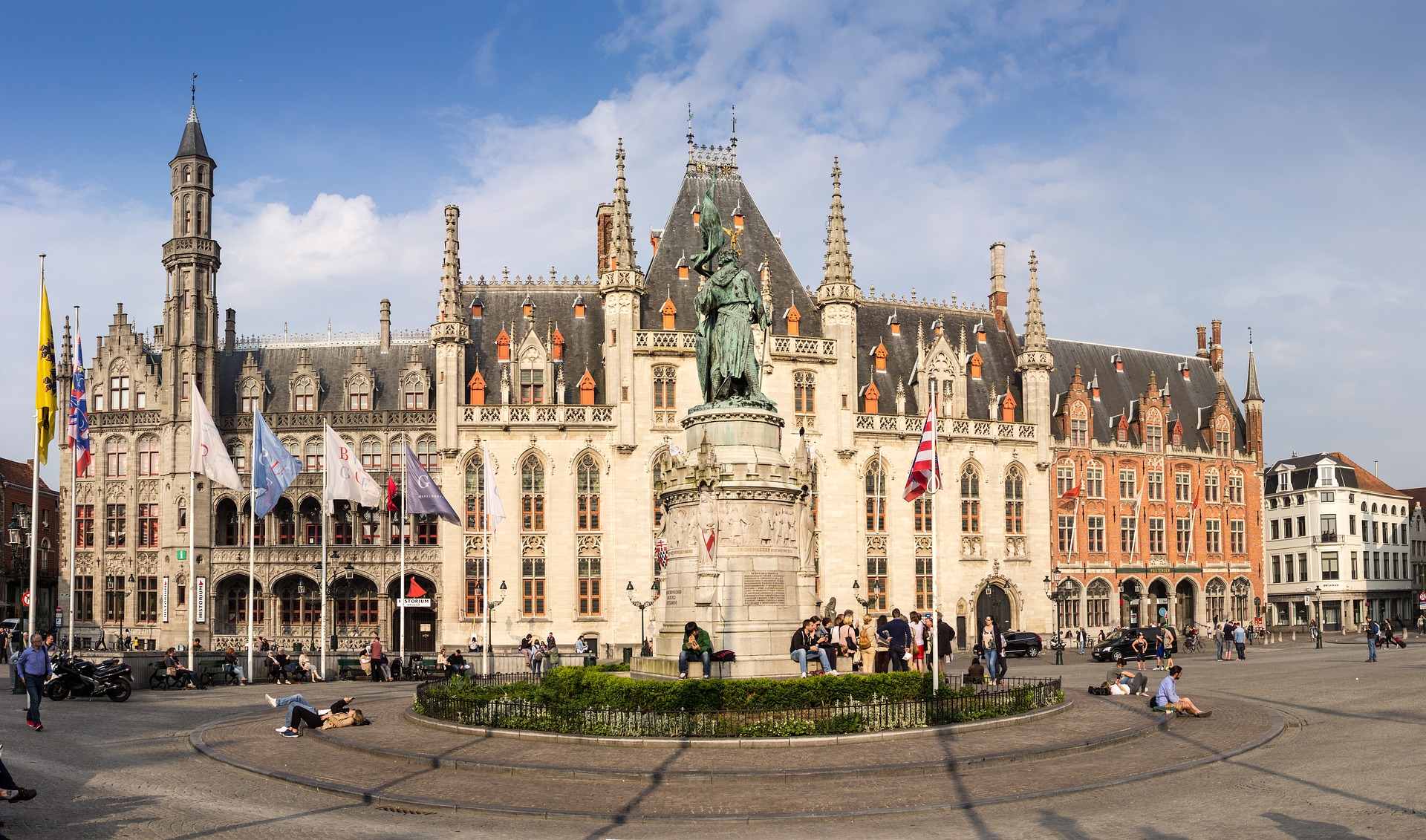
You then cycle north-east to join the network of cycle paths that will take you to Bruges, the Venice of the North, with its belfry, romantic canals and chocolates! A magical way to end this cycling holiday.

Share unforgettable moments during your cycling holiday with Normandie Rando

Notre agence de voyage à vélo rend votre séjour inoubliable en vous proposant une aventure loin des sentiers battus!  Bien plus que des vacances, c’est une véritable découverte de la région qui vous attend! Nous vous accompagnons en mettant à votre disposition un itinéraire tout tracé ou personnalisé selon vos exigences, des vélos de qualité et tout équipés pour partir l’esprit tranquille.

Itinerary

DAY 1: Arrival in Amiens

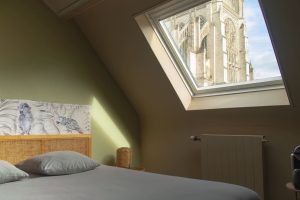
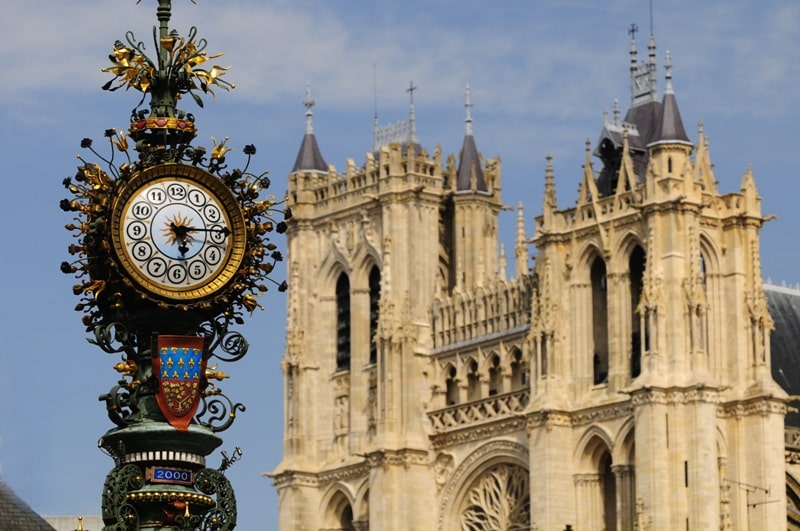
Your hotel is located in the city centre, close to the cathedral. Notre-Dame d’Amiens is the largest cathedral in France, with an interior volume of nearly 200,000 m3, twice that of Notre-Dame de Paris!
It remained unscathed after the First World War, and plaques have been affixed to it in memory of the soldiers of the Allied forces.
The city also welcomed Jules Verne, who wrote most of his novels here.
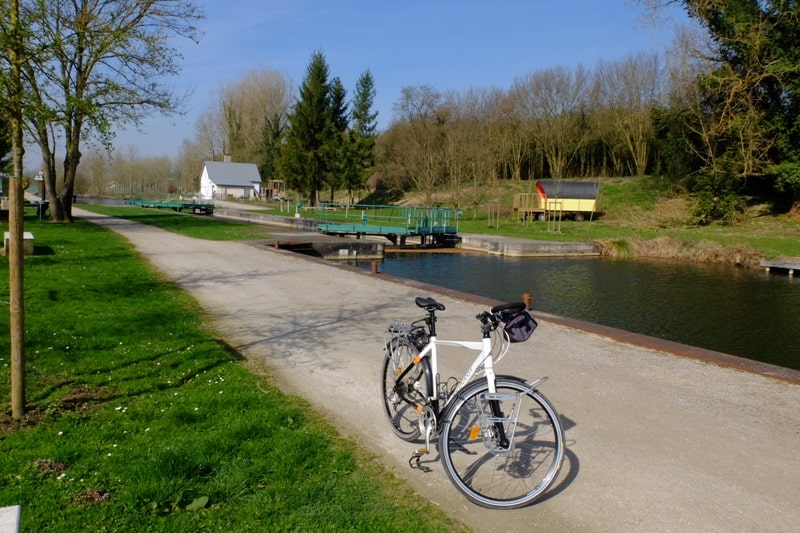
Amiens is a pleasant city where you can enjoy strolling through the hortillonnages (floating gardens) and along the canal before beginning your journey.

Night in Amiens.

DAY 2 : From Amiens to Albert

Distance to cover: 51 km (31,7 miles)

After picking up your bike, head east along the Somme, avoiding traffic. After about 20 kilometres, you will reach the Villers Bretonneux area where, from 24 to 26 April 1918, the Australian Expeditionary Force halted the German advance, thus preventing the capture of Amiens. Immerse yourself in history at the Australian National Memorial, and don’t miss the fascinating Franco-Australian museum located within the Victoria School.

Continue eastwards, crossing the Hamel battlefield to reach the other side of the Somme at Cerisy. Enjoy magnificent views of the river along the road to Albert.

Albert was the epicentre of the great Battle of the Somme and is the main industrial town in the Ancre Valley. The Somme 1916 Museum in Albert, housed in an underground shelter that was used as an air-raid shelter, traces military life during the First World War.

Night in Albert.

DAY 3 : From Albert to Arras

Distance to cover: 45 ou 67 km (28 or 41,6 miles)

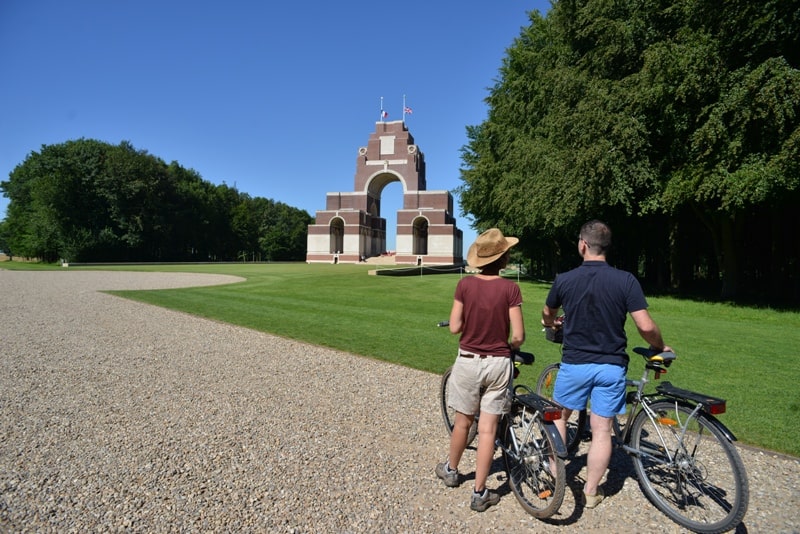
After passing the national necropolis, leave the town and follow the Ancre valley northwards before climbing the hill at Thiepval. The offensive launched on 1 July 1916 resulted in 20,000 British army casualties, making it the ‘bloodiest day in its military history’. Thiepval was liberated three months later on 27 September 1916.

You will pass Belfast Tower, erected in 1921 in memory of the Ulster Battalion that fought on 1 July 1916 at Thiepval. Cross the Ancre and enter Beaumont-Hamel Park. Here you will find the memorial to the men of the Newfoundland Regiment, who, barely out of their trenches, were ‘swept away’ by German machine gun fire.

A few more kilometres will take you to the German cemetery at Fricourt and the South African and New Zealand Memorials at Longueval. Your route then takes you through the village of Pozières, where the Australians, exhausted by incessant artillery counter-attacks, were relieved by the Canadians. 14,000 soldiers’ names are engraved on the walls of this cemetery.

You then leave the Somme department and travel the 20 km of countryside that separates you from Arras, the ‘capital’ of Artois.

With its Flemish Baroque style, Arras was long renowned for the quality of its linen and has since retained its wealth and influence! Your hotel is ideally located in the heart of the city. You will be charmed by the city’s architecture, from Flemish Baroque to Art Deco. Don’t miss the Belfry and the Vauban Citadel, both listed as UNESCO World Heritage Sites.

At the end of the day, relax on the terrace of one of the cafés on the magnificent Place des Héros.

Night in Arras.

DAY 4 : From Arras to Béthune

Distance to cover: 50 km (31 miles)

Follow the River Scarpe, then turn north for about 20 km to reach the large Vimy Park, which on 17 April 1917 was the scene of a fierce battle between the German army and Canadian troops, who lost more than 11,000 soldiers. Some say that ‘modern Canada was born in the trenches of Vimy.’ The impressive monument built on the heights bears witness to this event.

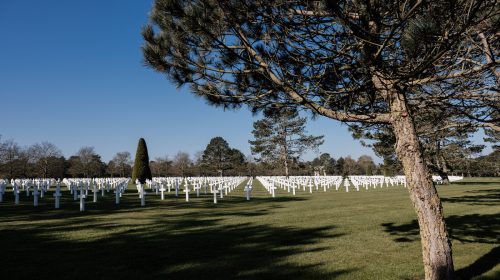
After a break in the village of Souchez, you will climb Lorette Hill, where, in May 1915, French and German troops fought fiercely for control of the Artois region. The Notre-Dame de Lorette cemetery, which is home to more than 40,000 soldiers, is still the largest French military cemetery today.

You then continue north, crossing part of the mining basin to reach Béthune, where you will spend the night.

Béthune is a historically bourgeois town that drew its wealth from the surrounding agricultural land, from textiles in the Middle Ages and then from the mechanical and chemical industries.

The First World War led to the destruction of almost half of the town. The German army, which did not occupy the town during the conflict, bombed the town centre on 20 May 1918, destroying almost everything except the belfry.

Since 1964, the town has been twinned with Hastings (England), known for hosting the battle that made William the Conqueror the new king of England.

Night in Béthune.

DAY 5 : From Béthune to Ypres

Distance to cover: 60 or75 km (30,3 or 46,6 miles)

Welcome to Flanders, or ‘Le Plat Pays’ (The Flat Country) as Jacques Brel called it in his song, which aptly sums up this landscape devoid of mountains.

When it comes to food, the specialities reflect the reputation of the locals: warm and welcoming! You will enjoy the famous Flemish carbonade, maroilles, Welsh rarebit, potjevleesch or waterzooï, accompanied, of course, by homemade chips and a good abbey beer!
Flanders was one of the richest, most densely populated and most coveted provinces in France. It played a leading role during the French Industrial Revolution.
The long option takes you to Fromelles, a small village that was the scene of fighting between Commonwealth soldiers (mainly Australians) and Germany. Between 19 and 20 July 1916, there were nearly 8,500 casualties.
You then rejoin the short route to Bailleul, capital of the ‘Monts des Flandres’, a series of small hills rising to less than 160 metres. From their summits, you can enjoy splendid views of the surrounding countryside. Relax in an estaminet, a typical local café. Visit the Abbaye du Mont des Cats, where you can taste the cheeses and beers produced by the Trappist monks.
This is also the region where the Franco-American writer Marguerite Yourcenar grew up.

Cross the Belgian border and head towards Ypres.

Night in Ypres.

DAY 6 : Loop around Ypres

Distance to cover: 49km (30,5 miles)

In October 1914, the front line came to a standstill a few kilometres from Ypres, forming a salient in the German lines. The wealthy Flemish city thus saw five successive battles take place on its doorstep, involving soldiers from all over the world.

Your loop takes you in their footsteps, from Zonnebeke to Langemark Poelkapelle via Passchendaele. More than 300,000 Allied soldiers, including 250,000 Commonwealth soldiers, lost their lives during the fighting. There are some 170 military cemeteries in the surrounding countryside.

Back in Ypres, it is difficult to imagine that the medieval city was almost completely destroyed at the end of the war. It is important to note that the city became prosperous in the Middle Ages and earned a reputation as the ‘capital of cloth craftsmanship’. A remnant of this era is the Cloth Hall, one of the largest Gothic-style civil buildings in Europe, which was destroyed during German bombing raids and then rebuilt identically. Here you can visit the “In Flanders Fields” Museum, which invites visitors to follow the journey of a soldier or civilian from that period.

The city also has many excellent chocolate shops and a few local specialities: waffles, Tapjesvlees, Patte de chat and Cuberdon.

At 8 p.m., head to the Menin Gate (Menenpoort in Dutch) where, every day since 1927, the bugles of the fire brigade have played the Last Post in tribute to the Commonwealth troops.

Night in Ypres.

DAY 7 : From Ypres to Bruges

Distance to cover: 60 km (37,3 miles)

After a hearty Flemish breakfast, you leave Ypres to the north-west, leaving the battlefields behind you. The excellent network of cycle paths will take you through farms and villages with no traffic, finally reaching the historic centre of Bruges…

If time allows, take an extra day to visit this jewel of Flanders.

Night in Bruges.

DAY 8 : Bruges

End of stay in Bruges after breakfast or additional night to visit the city.

Accommodation

Standard

À partir de 1,300 € Suppl. indiv. 340 €

Standard accommodation:

You will stay in small, family-run 2* or 3* hotels.
The welcome is always friendly and the rooms are simple but comfortable.
We know that walking or cycling holidays require a good night's sleep between each stage, so the bedding is always of high quality.
Because we organize active holidays, we attach great importance to breakfast.
Breakfast is varied and consists of fresh, local produce.

Où vous dormez

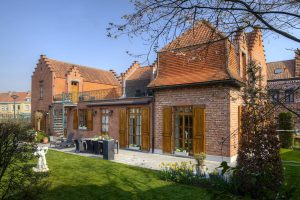
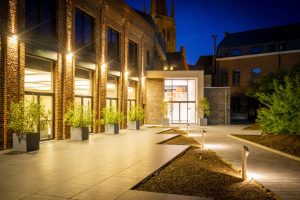
  • Amiens: Le Prieuré***
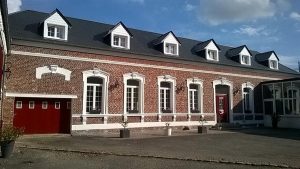
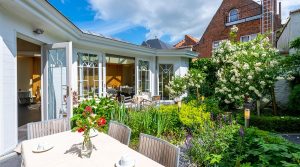
  • Abert / Méaulte : Chambre d'hôtes un parfum de campagne
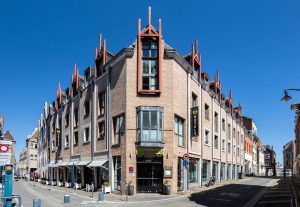
  • Arras: B&B Arras centre***
  • Béthune: Le vieux beffroi**
  • Ypres: Chambre d'hôtes Ter Vesten
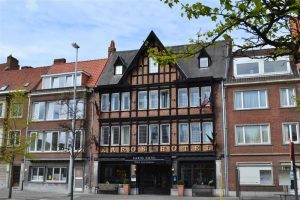
  • Bruges: The Black Swan hotel***
Confort

À partir de 1,530 € Suppl. indiv. 500 €

Comfort Accommodation

You will stay in 3* or 4* hotels.
The rooms are spacious and the hotel offers a wide range of services.
The bedding is of very good quality and the decor is tasteful.
The breakfast is varied, generous and consists of fresh, local products, both sweet and savoury.

Où vous dormez

  • Amiens: Le Prieuré*** chambre supérieure
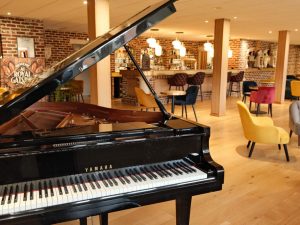
  • Albert: hôtel Royal Picardie****
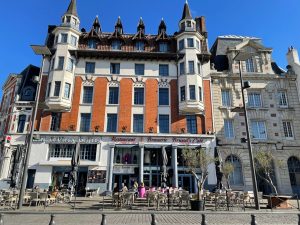
  • Arras: hôtel de l'Univers****
  • Béthune: Les Béthunoises Spa***
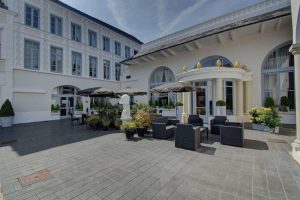
  • Ypres: Hôtel Albion****
  • Bruges: Hôtel Le Normandy****

Practical Information

Price Includes

Included in the tour price:

  • 7 nights with breakfast in standard or comfort accommodation.
  • 6 days of cycling.
  • Luggage transfer between each stage.
  • Detailed explanations of your route, advice…
  • GPX tracks and free access to our mobile phone navigation app.

Not included in the price of the tour:

  • Dinners, lunches and drinks.
  • Entrance fees and site visits.
  • Return transfer to the starting point at the end of the tour.
  • Bike hire.
  • Travel insurance.
  • Single room supplement.
  • Solo traveller supplement

Options, Supplements and Discounts

No supplement during high season.

Departures on Sundays.
If departing on another day, €50 supplement.

Solo traveller supplement: €390.

Don’t want to use our luggage transport service?
€80 discount (offer cannot be combined with the ‘Group traveller’ discount).

Group travellers (4 or more people): €180 discount.

6-day bike hire:
(Delivery to Amiens and collection in Bruges included)

Hybrid bike: 250€
Electric bike: 330€

All prices, discounts and supplements are per person.

How to Get There

Coming by train from Paris:

Departure from Gare du Nord station in Paris.
Arrival at Amiens station.
Several trains per day.
Journey time: between ≈ 1 hour 10 minutes (fastest) and ≈ 1 hour 30 minutes to 1 hour 40 minutes, depending on the timetable.

Coming by car:

Free public car park in Amiens.

How to Leave

Return to Paris by train:

There is no direct train — you must change trains at least once, usually via Brussels-Midi/Eurostar (or a Belgian train + a Eurostar) to get to Paris Gare du Nord station.
Journey time: between ≈ 2 hours 45 minutes and ~ 3 hours 30–3 hours 45 minutes depending on connections.
Several departures per day from Bruges.

Collect your car at the end of the tour:

Depart from Bruges by train to Brussels-Midi (Belgian train).
From Brussels-Midi, take a train to Paris or a cross-border train, depending on the available options.
From Paris (or another station depending on the connection), take a train to Arras.

from
€1300
per person

News